


Every guitarist who plays gigs around Huntingdon knows the nerves that arrive once you hand your instrument over to transport. The journey to a show can test not just your playing, but the safety of your gear too. Mastering the basics of guitar protection and packing essentials means you can focus on your performance, confident your acoustic or electric guitar will arrive ready to play.
Table of Contents
- Step 1: Gather Essential Packing Materials
- Step 2: Prepare and Secure the Guitar
- Step 3: Choose and Fit a Suitable Case
- Step 4: Protect Against Movement and Impact
- Step 5: Check Security and Finalise Packing
Quick Summary
| Key Insight | Explanation |
|---|---|
| 1. Invest in a Hard-shell Case | A high-quality hard-shell case provides essential protection and is your guitar’s first line of defence against damage during transit. |
| 2. Properly Prepare Your Guitar | Loosening strings and removing accessories reduces the risk of damage and maintains stability during transportation. |
| 3. Ensure Snug Fit in Case | Use padding and custom inserts to prevent internal movement, protecting your guitar against shocks and impacts. |
| 4. Perform Final Packing Checks | Double-checking latches, locks, and padding ensures your guitar is secure and ready for safe travel. |
| 5. Control for Environmental Factors | Using silica gel packets and humidity control products helps maintain optimal conditions and prevents moisture-related damage. |
Step 1: Gather Essential Packing Materials
Before embarking on your guitar transportation journey, gathering the right materials is crucial to ensure your instrument arrives safely at its destination. Think of this preparation as creating a protective cocoon for your beloved guitar, shielding it from potential bumps, scrapes, and environmental challenges during travel.
To pack your guitar securely, you’ll need several key items that work together to provide comprehensive protection. Start by collecting the following essential materials:
- A hard-shell guitar case with robust exterior and padded interior
- Soft microfibre cloth for cleaning and surface protection
- Bubble wrap or specialised instrument padding
- Packing tape (preferably cloth-backed for stronger adhesion)
- Silica gel packets to control moisture during transportation
When selecting these materials, prioritise quality over cost. University packing guidelines emphasise the importance of investing in sturdy protective gear, especially for delicate instruments. A high-quality hard case is your guitar’s first line of defence against potential transportation mishaps.
Professional musicians know that proper preparation prevents poor performance.
Top Tip: Check your chosen case’s internal padding and make certain it offers snug support without allowing the guitar to shift during movement.
Step 2: Prepare and Secure the Guitar
Preparing your guitar for travel involves more than just placing it in a case. You need to create a comprehensive protection strategy that safeguards your instrument from potential damage during transportation. Musician preparation techniques emphasise the critical importance of understanding how environmental factors can impact your instrument.
Before securing your guitar, perform these essential preparation steps:
- Loosen the strings slightly to reduce tension and prevent neck warping
- Remove any accessories like capos, straps, or external attachments
- Clean the guitar thoroughly with a soft microfibre cloth
- Check and tighten all hardware such as tuning pegs and strap buttons
- Inspect the neck for any signs of stress or misalignment
The goal is to create a stable environment for your instrument. Proper preparation minimises the risk of structural damage or tuning instability during transit. Remember that small preventative measures can save you from costly repairs down the line.
A well-prepared guitar is a musician’s most reliable companion.
Pro tip: If travelling to areas with significant temperature or humidity changes, consider using a humidity control packet inside your guitar case to maintain optimal conditions.
Step 3: Choose and Fit a Suitable Case
Selecting the right guitar case is more than a simple purchase – it’s an investment in your instrument’s long-term protection. Guitar protection strategies reveal that the case you choose can make a significant difference in preserving your guitar’s condition during transport.
When choosing a case, consider these critical factors:
- Hard-shell cases provide maximum protection against physical impacts
- Padded gig bags offer lightweight portability for short trips
- Interior padding should fit your guitar’s specific body shape
- Weather resistance is crucial for protecting against temperature and humidity changes
- Weight and portability matter for frequent travellers
The perfect case should feel like a second skin for your instrument. It needs to be snug enough to prevent movement but not so tight that it creates unnecessary pressure on the guitar’s body. A well-fitted case acts as a protective cocoon, absorbing external shocks and maintaining a stable internal environment.

The following table summarises how various case types impact guitar safety and portability:
| Case Type | Protection Level | Portability Benefit |
|---|---|---|
| Hard-shell Case | Highest, rigid exterior | Moderate, heavier to carry |
| Padded Gig Bag | Moderate, soft padding | High, lightweight and flexible |
| Flight Case | Maximum, reinforced | Low, very heavy bulk |
Your guitar’s safety begins with the right case.
Pro tip: Always try your guitar in the case before purchasing to ensure a perfect, custom-like fit that minimises internal movement.
Step 4: Protect Against Movement and Impact
Ensuring your guitar remains immobilised during transport is crucial to preventing potential damage. Strategic storage techniques demonstrate the importance of minimising internal movement and protecting against unexpected impacts during transit.
To create a robust protection strategy, implement these key measures:
- Use soft padding between the guitar and case interior
- Add neck support to prevent lateral movement
- Strategically place additional foam blocks around vulnerable areas
- Secure loose components like tuning pegs and bridge
- Create a snug fit that eliminates potential shifting
Think of your guitar case as a protective cocoon. Every millimetre of extra space represents a potential risk zone where your instrument could suffer unnecessary stress or damage during transportation. The goal is to create an environment so stable that your guitar feels like it’s suspended in a protective embrace.
A millimetre of prevention is worth a centimetre of repair.
Pro tip: Consider using custom-cut foam inserts that match your guitar’s exact body shape for the most precise protection possible.
Step 5: Check Security and Finalise Packing
The final stage of guitar transportation is a critical moment that determines your instrument’s safety during travel. Travel security protocols emphasise the importance of meticulous checking and securing before any journey.
Complete your packing preparation with these essential final checks:
- Double-check all case latches and locks for secure closure
- Verify internal padding remains in optimal position
- Inspect guitar for any loose accessories or potential movement points
- Test case stability by gentle movement without the guitar inside
- Confirm external case condition for any potential weak points
Your final moments of preparation can prevent potential disaster. Each careful check represents an investment in your instrument’s protection, reducing the risk of unexpected damage during transportation. Think of this process as creating a protective shield around your most treasured musical companion.
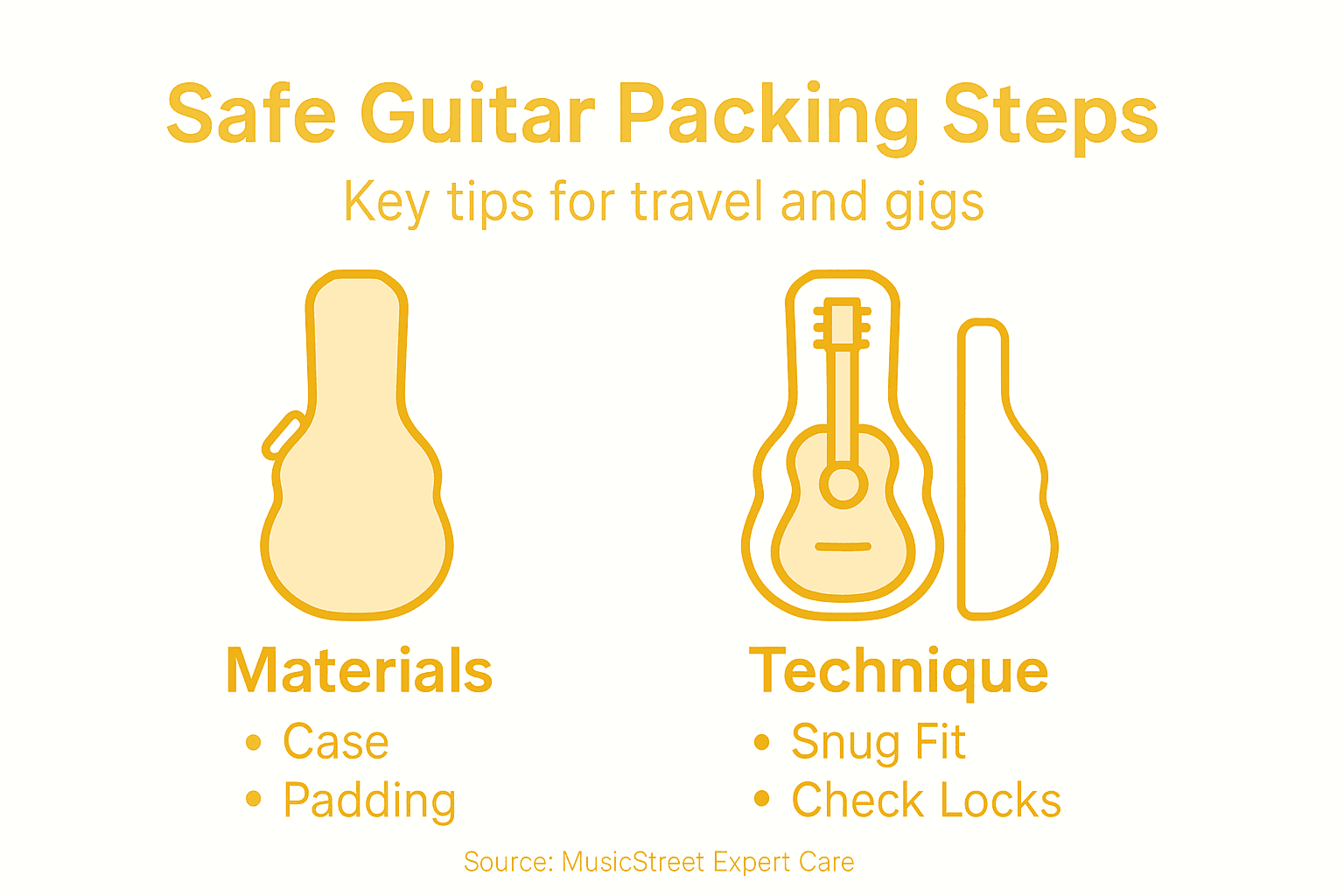
Here is a quick reference for final checks to ensure guitar safety when packing:
| Checkpoint | Purpose | Example Issue Avoided |
|---|---|---|
| Latch and Lock Security | Prevents accidental case opening | Guitar falling out in transit |
| Internal Padding Check | Maintains instrument’s snug fit | Guitar shifting inside case |
| Case Condition Review | Identifies structural weaknesses | Case cracking during handling |
Precision in preparation prevents performance problems.
Pro tip: Take a quick smartphone photo of your packed guitar case as a reference point, which can be helpful for insurance purposes or identifying potential issues during transit.
Protect Your Guitar with Expert Care from MusicStreet
Packing a guitar safely for travel demands more than just the right materials and preparation. Ensuring your instrument arrives without damage requires quality cases, expert setup, and personalised advice tailored to your specific guitar model. If you are concerned about securing your guitar against movement and impact or need a perfectly fitted case to shield your instrument, MusicStreet offers professional solutions designed to meet these challenges.

Discover a wide selection of hard-shell cases and premium guitar accessories at MusicStreet. Benefit from expert setup, post-sale support, and personalised service that guarantees your guitar is protected every step of the way. Whether you are preparing for a gig or a long journey, visit MusicStreet now to find your ideal guitar case and professional advice that puts your instrument’s safety first.
Frequently Asked Questions
How do I gather the essential packing materials for my guitar?
Before packing your guitar, gather key materials such as a hard-shell case, soft microfibre cloth, bubble wrap, packing tape, and silica gel packets. Collect these items to create a protective environment that shields your guitar from potential damage during transport.
What steps should I take to prepare my guitar before packing it?
Prepare your guitar by loosening the strings to reduce tension, removing accessories, cleaning the surface, checking hardware, and inspecting the neck. Taking these steps helps minimise the risk of structural damage during travel, ensuring your instrument remains stable.
How can I choose the right case for my guitar?
Select a case based on protection level and portability. A hard-shell case provides maximum protection, while padded gig bags offer lightweight options for shorter trips; ensure the interior padding fits your guitar snugly to prevent movement.
What precautions should I take to protect my guitar from movement during transportation?
Use soft padding inside the case to create a snug fit, add neck support, and strategically position foam blocks around vulnerable areas. These measures will help prevent your guitar from shifting during transit, reducing the risk of damage.
What final checks should I perform before closing my guitar case?
Double-check all latches and locks to ensure a secure closure, verify that internal padding is in place, inspect for loose accessories, and assess the case’s condition for any weaknesses. These final checks are crucial for keeping your guitar safe during travel.
How can I document my packed guitar case for insurance or reference?
Take a smartphone photograph of your packed guitar case to serve as a reference point. This can be helpful not only for potential insurance claims but also for recounting what you packed in case of any future needs.








Share:
Complete Guitar Maintenance Guide: Keep Your Instrument in Perfect Condition
Why Guitar Maintenance Matters for UK Players