

Table of Contents
- What Makes Tube Amps Different for Beginners
- Tube Amp vs Solid-State Amp: What Beginners Should Know
- Best Beginner Guitar Amp: Balancing Tone and Practicality
- Tube Amp Wattage for Home Use: How Much Do You Actually Need
- Tube Amp Maintenance for Beginners: Is It Really That Complex?
- The Real Cost of Starting with Tubes
- Should You Buy a Tube Amp Right Now?
- Frequently Asked Questions
Last Updated: October 17, 2026
What Makes Tube Amps Different for Beginners
A tube amplifier works by passing your guitar signal through vacuum tubes, which add warmth and natural compression to your tone. This is fundamentally different from solid-state or digital amps, which use transistors or software algorithms to shape sound. For beginners, understanding this difference matters because it affects how the amp responds to your playing, how much maintenance it requires, and ultimately whether a tube amp is worth it for beginners in your situation.
The key distinction is responsiveness. Tube amps react to subtle changes in how hard you pick, how you bend strings, and how you manipulate your volume knob. This sensitivity can be rewarding for experienced players but challenging for beginners who are still developing consistent technique.
At MusicStreet, we work with guitarists at every stage, and we've noticed that beginners often underestimate how much their playing style influences a tube amp's character. A solid-state amp will sound relatively consistent regardless of your technique. A tube amp will expose inconsistencies in your playing, which is actually valuable feedback, but it can feel frustrating when you're still learning.
Tube Amp vs Solid-State Amp: What Beginners Should Know
The choice between tube and solid-state isn't really about which is objectively "better", it's about which matches your needs. The practical differences are clear.
Tube amps deliver a natural compression and warmth that many players love. When you push them hard, they respond musically. Solid-state amps stay clean and consistent, even at high volumes. Digital amps offer both characteristics plus hundreds of additional sounds in a single unit.
For beginners specifically, here's what matters:
| Feature | Tube Amp | Solid-State Amp | Digital Amp |
|---|---|---|---|
| Tone character | Warm, natural breakup | Clean, consistent | Highly variable |
| Learning curve | Steeper, settings interact | Gentler, more forgiving | Moderate, many options |
| Maintenance | Regular tube replacement | Minimal | Software updates |
| Portability | Heavy | Light | Very light |
| Cost to start | Higher | Mid-range | Lower |
A tube amp demands you learn how gain, bias, and output interact. Solid-state amps are more straightforward: turn it on, set the volume, and play. Digital amps offer the most flexibility but can overwhelm a beginner with choices.
The real question is whether you want to learn amp operation as part of your guitar journey or whether you'd rather focus purely on technique. Neither answer is wrong, it depends on your priorities.
Best Beginner Guitar Amp: Balancing Tone and Practicality
If you've decided a tube amp appeals to you, the Blackstar HT-1R MkIII offers an excellent entry point. At £399.00, it's a genuine tube amplifier in a compact 1-watt format, which means it sounds like a full tube amp but stays quiet enough for home use. The award-winning HT range has been a mainstay for professional and budding musicians because it balances pristine tone in a compact package.

What makes the HT-1R MkIII practical for beginners is its DSP speaker simulator, which lets you choose from hundreds of different cabinet, microphone, and room settings. You can save three presets and recall them directly from the amp. This removes the guesswork about which cabinet sound works best for your style. For a beginner, having those presets dialled in by experienced players means you're not starting from scratch.
Alternatively, the Blackstar TV-10A Combo at £599.00 delivers premium Class A valve tones with authentic American character. It includes footswitchable clean and drive channels, a series effects loop, and cabinet-emulated line output for silent practice and direct recording. This amp is more versatile than the HT-1R if you want to explore different sounds as you develop your style.
Blackstar HT-1R MkIII Guitar Amp Combo →
For those hesitant about tube amp complexity, the Orange Crush 20RT at £159.00 uses an all-analogue signal path but is solid-state, making it more forgiving. It includes reverb, an integrated chromatic tuner, cabinet simulation, and headphone output, everything a beginner needs without the maintenance requirements of tubes.
Tube Amp Wattage for Home Use: How Much Do You Actually Need
This is where many beginners make a costly mistake. They assume they need 50 watts or more because that's what they've heard professional touring musicians use. In reality, home players rarely need more than 5 to 10 watts.
Wattage doesn't directly translate to volume in the way most people think. A 1-watt tube amp can be louder than you'd expect because tube amps compress dynamically. Push them harder and they naturally break up into distortion. This means a 1-watt tube amp like the Blackstar HT-1R MkIII can fill a bedroom and still sound musical.
The real benefit of higher wattage is headroom, the ability to play clean at higher volumes without the amp starting to distort. For beginners learning at home, you don't need that headroom. You want an amp that sounds good at the volumes you'll actually use: probably 70 to 90 decibels, which is roughly conversational volume.
A 20-watt amp like the Orange Crush 20RT gives you plenty of volume for home practice and small venues. It's portable enough to move between rooms or take to a friend's house. Anything above 20 watts becomes impractical for home use without soundproofing.
Tube Amp Maintenance for Beginners: Is It Really That Complex?
This is the question that stops many beginners from choosing tubes. The honest answer: it's not complex, but it does require attention.
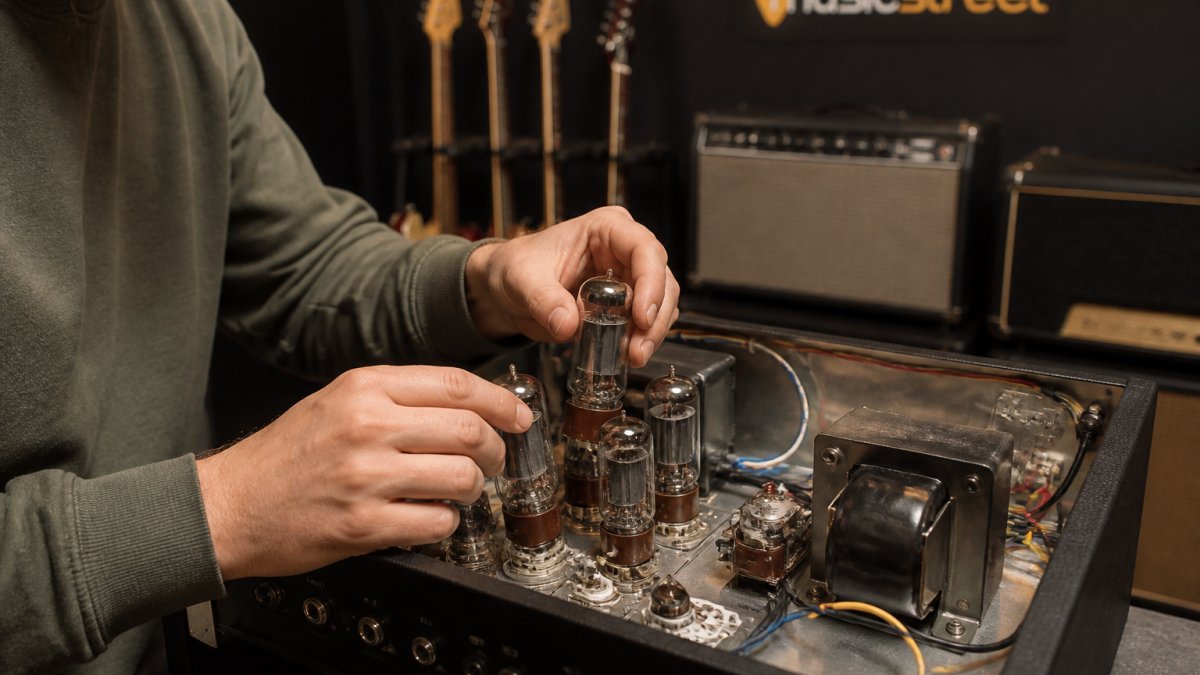
Tube amps need periodic tube replacement. Tubes wear out gradually, they don't fail suddenly. You'll notice the tone becoming thinner or quieter before a tube actually dies. Replacement tubes cost between £20 and £80 each depending on the type.
Biasing is the other maintenance task beginners worry about. This is the process of setting the idle current in the power tubes so they operate safely and sound good. Modern amps like the Blackstar TV-10A handle this automatically or provide straightforward instructions. You don't need specialist knowledge, just follow the manual.

The real maintenance advantage of solid-state or digital amps is that there's essentially nothing to maintain. They'll work the same way in five years as they do today. Tube amps require you to think about them occasionally, but the process isn't difficult.
The Real Cost of Starting with Tubes
Beyond the purchase price, tube amps have ongoing costs that solid-state amps don't.
A tube amp starts at £399 for the Blackstar HT-1R MkIII. Over five years, you'll spend roughly £100 to £200 on replacement tubes.
Blackstar HT-1R MkIII Guitar Amp Combo →
A solid-state amp like the Orange Crush 20RT costs £159 upfront. Over five years, your only cost is occasional cleaning. Digital amps fall somewhere in between: low maintenance but potentially needing software updates or repairs if components fail.
The cost difference is real but not enormous. The bigger question is whether you value what tube amps offer enough to justify that extra expense. Many beginners find they don't, they'd rather spend that money on better guitars, pedals, or lessons.
Should You Buy a Tube Amp Right Now?
Here's the honest assessment: whether a tube amp is worth it for beginners depends only on whether you meet specific criteria.
Buy a tube amp if you're committed to playing long-term and you want to learn how amplifiers actually work. If you're curious about tone and willing to invest time understanding gain staging and biasing, tubes reward that curiosity. If you play regularly and want an amp that responds to your technique, a tube amp will challenge you to improve.
Don't buy a tube amp if you're still deciding whether guitar is for you, if you need maximum portability, or if you want zero maintenance. A solid-state amp removes the complexity so you can focus on playing.
The Blackstar HT-1R MkIII at £399 is the best entry-level tube amp for beginners because it's genuinely a tube amp but stays practical for home use. If you want something simpler, the Orange Crush 20RT at £159 gives you excellent tone without the tube complexity. If you want maximum flexibility, the Blackstar ID Core 10W V4 at £125 offers digital modelling with exceptional features.

The choice comes down to this: do you want to learn amp operation as part of your musical development, or do you want an amp to stay out of your way? Either answer is valid. At MusicStreet, we help beginners find the right amp for their actual situation, not what they think they should want. Our team can discuss your playing style, your space, and your maintenance comfort level to recommend the best option. We stock all these amps, they're expertly set up and ready to play, and we offer free UK delivery on orders over £99. SHOP NOW to explore our full range of beginner-friendly amplifiers.
Frequently Asked Questions
Are tube amps good for beginners?
Tube amps can work for beginners, but they demand more care than alternatives. They deliver authentic valve tone and respond well to playing dynamics, which helps you develop technique. However, they require understanding gain settings, bias, and regular maintenance. Many beginners find solid-state or digital amps less demanding while still offering excellent sound for learning. Your choice depends on whether you prioritise tone quality over convenience.
How do tube amp vs solid-state amp options compare for home practice?
Solid-state amps are more forgiving, reliable, and often cheaper. They handle volume changes better and need minimal upkeep. Tube amps deliver richer, more responsive tone but are sensitive to how you play and require valve replacement every few years. For bedroom practice, a solid-state amp at lower wattage or a digital option with headphone output often suits beginners better. Tube amps shine once you've grasped the fundamentals.
What tube amp wattage for home use makes sense for beginners?
Start with 1 to 5 watts for home practice. A 1-watt tube amp like the Blackstar HT-1R MkIII (£399.00) delivers full valve tone at bedroom volumes. Even at 5 watts, you'll struggle to turn a tube amp down enough for quiet practice without losing responsiveness. Many beginners underestimate how loud even low-wattage tubes are. If you need silent practice, consider a digital amp with headphones instead.
Do beginner guitarists need a tube amp?
No. Beginner guitarists do not need a tube amp to develop solid technique or learn music theory. Digital and solid-state amps deliver excellent tone at lower cost and with far less hassle. Tube amps suit players who specifically want valve character and are willing to manage maintenance and cost. Focus first on consistent practice and playing fundamentals. Upgrade to tubes once you know what tone you're chasing.





Share:
How to Use Locking Tuners: Restring and Tune Step by Step