


Many guitarists believe tube amplifiers are the only option for serious tone, but solid state amps have quietly become indispensable tools for musicians at every level. Using transistors instead of vacuum tubes, solid state amplifiers deliver cleaner, crisper sound with remarkable reliability. Whether you’re starting your musical journey or touring professionally, understanding solid state technology helps you make informed decisions about gear that matches your playing style, budget, and performance needs. This guide explains how solid state amps work, their advantages over tube designs, and when they’re the smartest choice for your music.
Table of Contents
- Key takeaways
- Understanding how solid state amps work
- Advantages and disadvantages of solid state amps
- Comparing solid state and tube amplifiers: key differences
- Practical applications: choosing a solid state amp for your music
- Explore premium guitar amps and guitars at MusicStreet
- Frequently asked questions
Key Takeaways
| Point | Details |
|---|---|
| Core components | Solid state amps use transistors and semiconductors to amplify guitar signals, delivering clean and precise tones. |
| Durability and reliability | They are highly durable and require minimal maintenance compared to tube designs. |
| Sound versus tubes | Solid state offers cleaner and crisper tones, while tube amps provide warmer compression and more variability when pushed. |
| Ideal use cases | They are well suited for beginners, rehearsals, gigs and travel due to affordability and reliability. |
| Portability and value | They are lighter and more affordable, making them popular for rehearsals, gigs and travel. |
Understanding how solid state amps work
Solid state amplifiers represent a fundamentally different approach to signal amplification than traditional tube designs. At their core, these amps use transistors and semiconductors mounted on circuit boards to boost the electrical signal from your guitar. When you strike a string, the pickup converts vibrations into a weak electrical current. This signal travels through the amp’s preamp stage, where transistors increase its strength, then moves to the power amp section for final amplification before reaching the speaker.
The transistor technology creates the signature sonic characteristics solid state amps are known for. Unlike vacuum tubes that introduce harmonic distortion and compression as they heat up, transistors amplify signals more linearly. This produces the cleaner, crisper sound many players associate with solid state designs. The amplification happens through semiconductor materials that control electron flow with remarkable precision, resulting in accurate reproduction of your guitar’s natural voice without the warm colouration tube circuits add.
Comparing this to tube technology reveals why the two sound so different. Tube amps rely on heated vacuum tubes where electrons flow through empty space, creating natural compression and even-order harmonics that many describe as warm or musical. Solid state circuits skip this analogue process entirely, using solid materials to control current flow. This explains why solid state amps maintain consistent tone regardless of volume, whilst tube amps change character as you push them harder.
For practical maintenance, solid state designs require far less attention than their tube counterparts. You won’t face regular tube replacements or bias adjustments. The components simply work reliably for years. Most solid state amps need only occasional cleaning and proper storage to deliver decades of service. If you’re exploring different guitar amplifier types explained, understanding these core differences helps clarify which technology suits your needs.
Pro Tip: Store your solid state amp in a dry environment and let it reach room temperature before playing if it’s been in cold storage. Whilst transistors handle temperature changes better than tubes, condensation can still damage electronic components.
Advantages and disadvantages of solid state amps
Solid state amplifiers deliver several compelling benefits that make them practical choices for many musicians. Durability, reliability, lighter weight, lower maintenance, affordability, and consistent performance at any volume stand out as primary advantages. You can transport a solid state amp to rehearsals and gigs without worrying about fragile tubes breaking. There’s no warm-up period required, you simply switch on and play immediately. The financial benefit extends beyond purchase price, ongoing costs remain minimal since you never buy replacement tubes or pay for rebiasing services.
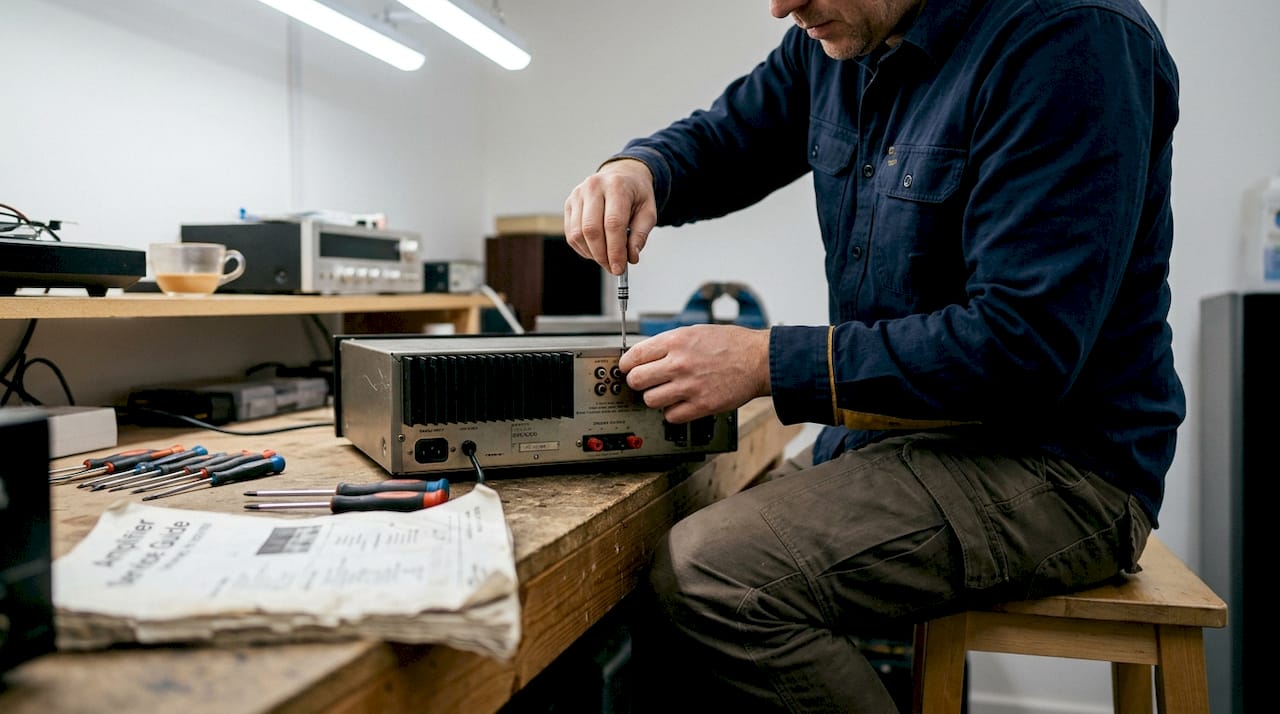
The consistent performance characteristic deserves special attention. Solid state amps maintain their tonal signature whether you’re playing quietly at home or pushing stage volume. This predictability helps you dial in sounds that translate reliably across different venues and situations. For recording sessions, this consistency means you can achieve repeatable tones without the variables tube amps introduce. The lower weight makes them genuinely portable, a 50-watt solid state combo might weigh half what an equivalent tube amp does.
However, solid state designs do present certain limitations compared to tube technology. Many players find the tonal character less warm or responsive than tubes provide. The natural compression and harmonic richness tube circuits generate doesn’t occur in transistor designs. When you dig into strings hard, tube amps respond dynamically, their distortion evolves musically. Solid state clipping tends toward harsher characteristics unless carefully designed. Some guitarists describe solid state distortion as sterile or artificial, though modern designs have narrowed this gap considerably.
| Characteristic | Solid state | Tube |
|---|---|---|
| Maintenance frequency | Minimal | Every 1-2 years |
| Tonal warmth | Clean, precise | Warm, compressed |
| Initial cost | Lower | Higher |
| Weight | Light | Heavy |
| Volume consistency | Stable | Changes with drive |
The decision ultimately depends on your priorities. If you value reliability and practicality, solid state delivers. If tonal complexity matters most and you’re willing to manage maintenance, tubes might suit you better. Consider checking how to pick a guitar amp guide for deeper selection advice, and explore why tube amps sound better understanding tone if you’re curious about the tube perspective.
Pro Tip: Match your amp choice to your actual playing situations, not idealised scenarios. If you rehearse weekly and gig monthly, solid state reliability might serve you better than tube tone you rarely push hard enough to appreciate.
Comparing solid state and tube amplifiers: key differences
The longevity and maintenance cost differences between these technologies reveal stark practical contrasts. Solid state amps last 10-15 years with failure rates below 5%, whilst tube amps typically demand £50-100 tube replacements every one to two years. Over a decade, tube maintenance costs can exceed the original purchase price of a quality solid state amp. This financial reality matters especially for working musicians who depend on their gear remaining functional without constant investment.
Loudness perception presents another surprising difference. A 15-watt tube amplifier often matches the perceived volume of a 50-watt solid state design. This occurs because tube circuits compress signals naturally, making them seem louder at equivalent wattage ratings. The tube compression also helps them cut through band mixes more effectively. When comparing amps, don’t assume higher wattage automatically means louder performance, the underlying technology dramatically affects real-world volume.
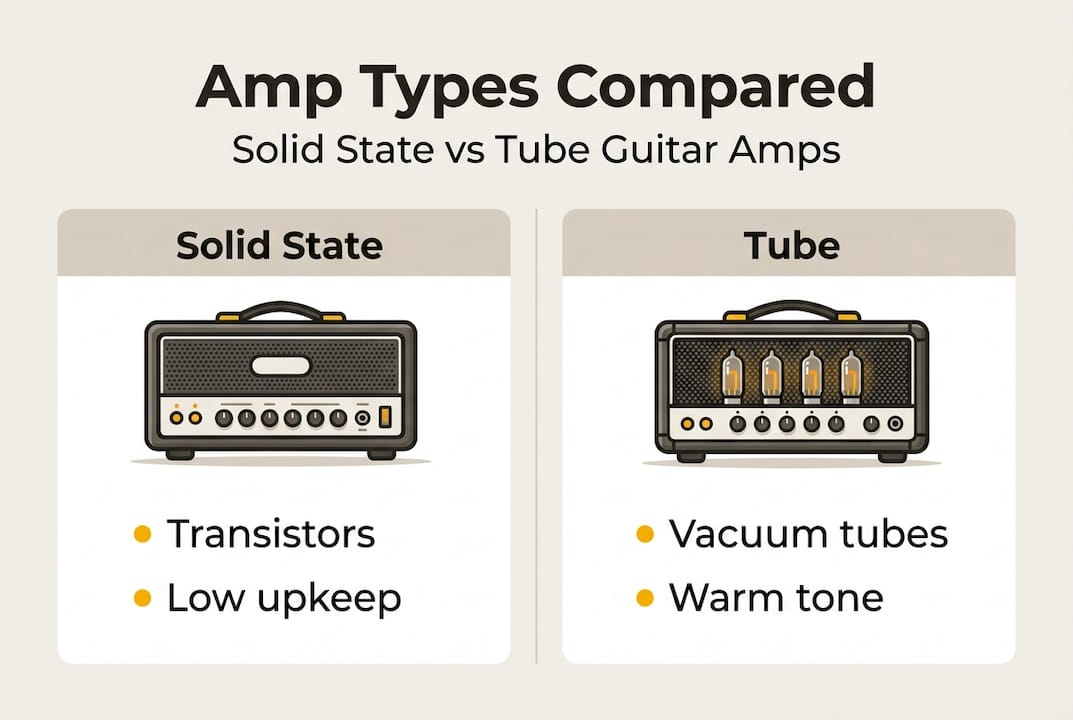
Tonal character separates these designs most distinctly. Tube amplifiers generate warmth through even-order harmonic distortion and natural compression as signals push the tubes. This creates the musical breakup and touch sensitivity players prize. Solid state circuits amplify more linearly, producing clean, crisp tones without the organic colouration tubes add. Neither approach is objectively superior, they simply serve different musical goals. Blues and classic rock players often prefer tube character, whilst jazz and metal guitarists might favour solid state precision.
| Metric | Solid state | Tube |
|---|---|---|
| Lifespan | 10-15 years | 5-10 years (with maintenance) |
| Failure rate | Under 5% | Higher, tubes wear out |
| Annual maintenance cost | £0-20 | £50-100 |
| Wattage efficiency | Lower perceived volume | Higher perceived volume |
| Harmonic content | Linear, fewer harmonics | Rich even-order harmonics |
When choosing between technologies, consider these decision factors in order of importance:
- Assess your actual tonal needs based on the music you play, not gear mythology or what famous players use
- Calculate total ownership costs over five years, including maintenance, tubes, and potential repairs
- Evaluate portability requirements if you regularly transport your amp to different locations
- Consider your technical comfort with maintenance tasks or access to qualified repair technicians
- Test both technologies in realistic playing situations at volumes you’ll actually use
For players interested in splitting the difference, hybrid guitar amps explained covers designs that combine tube preamps with solid state power sections, offering compromise solutions.
Practical applications: choosing a solid state amp for your music
Solid state amplifiers excel in specific scenarios where their strengths align perfectly with musician needs. Beginners benefit enormously from solid state reliability and simplicity. You can focus entirely on developing technique and musicality without managing tube maintenance or worrying about fragile components. Rehearsal spaces suit solid state amps brilliantly since you’ll move gear regularly and need consistent performance without fuss. Musicians who travel frequently appreciate the lighter weight and durability, your amp survives transport without the anxiety of broken tubes.
Solid state amps like Boss Katana exemplify why beginners gravitate toward this technology. These models deliver affordable, versatile, low-maintenance performance with built-in effects and multiple amp voicings. You get tremendous value without compromising sound quality for practice and small gigs. The Katana series particularly offers surprising tonal flexibility through digital modelling whilst maintaining solid state reliability. Other popular options include Roland Jazz Chorus amps for their legendary clean tones and Peavey designs known for rugged construction.
Gigging musicians who perform multiple times weekly find solid state reliability invaluable. You can depend on your amp working every night without carrying backup tubes or tools for emergency repairs. The consistent tone means your carefully dialled settings translate predictably across different venues. For covers bands playing varied styles, solid state versatility handles everything from clean jazz to heavy rock without needing multiple amps. The lower weight reduces load-in fatigue when you’re playing four-hour pub gigs several nights weekly.
Matching amplifier wattage to your typical venues prevents both underpowering and excessive volume. Small clubs and rehearsals work perfectly with 20-30 watt solid state combos. Medium venues might need 50-75 watts to compete with drums and bass. Remember that solid state watts don’t match tube watt loudness directly, so test amps in realistic settings. Your playing style also matters, clean players might need more headroom than those using heavy distortion.
Explore electric guitar and amp for beginners comparison to understand how different combinations work together, or check electric guitar and amp duos that will blow your mind for inspiration on pairing guitars with appropriate amplification.
Pro Tip: Prioritise your actual needs over aspirational gear choices. If you’re practising at home and playing occasional open mics, a reliable 20-watt solid state amp serves you better than an expensive tube amp you can never turn up enough to hear its best qualities.
Explore premium guitar amps and guitars at MusicStreet
Finding the right amplifier transforms your playing experience, and MusicStreet offers carefully selected gear to match every musician’s needs. Whether you’re drawn to solid state reliability or curious about other amplification options, our range includes quality amps from trusted manufacturers alongside expert guidance to help you choose wisely. We understand that gear decisions involve balancing tone, practicality, and budget, our team provides honest advice based on your actual playing situations rather than pushing expensive equipment you don’t need.

Browse our collection of solid state amplifiers perfect for beginners, gigging musicians, and everyone between. Each amp in our inventory receives professional inspection and setup, ensuring you receive gear that performs reliably from day one. Visit our Huntingdon showroom to test different models at realistic volumes, or explore our online selection with detailed specifications and customer reviews. Our commitment extends beyond the sale, we offer ongoing support, repairs, and advice as your musical journey evolves. Discover quality amplification that serves your music at our premium guitar shop today.
Frequently asked questions
What is the difference between a solid state amp and a tube amp?
Solid state amplifiers use transistors and semiconductors to amplify guitar signals, whilst tube amps rely on vacuum tubes that heat up during operation. This fundamental technological difference affects tone, maintenance, and reliability. Tube amps produce warmer, more compressed sounds with natural harmonic richness, but require regular tube replacements and careful handling. Solid state designs deliver cleaner, more precise tones with exceptional reliability and minimal maintenance needs, making them practical for many playing situations.
Are solid state amps suitable for beginners?
Absolutely, solid state amplifiers represent ideal choices for guitarists starting their musical journey. They cost less initially and require virtually no maintenance, letting you focus entirely on developing skills rather than managing gear. Models like the Boss Katana offer remarkable versatility with built-in effects and tone options that help beginners explore different sounds affordably. The durability means your first amp will likely serve you for years as you progress. Check our how to pick a guitar amp guide for detailed selection advice tailored to beginners.
How long do solid state amps typically last?
Solid state amplifiers last 10-15 years with failure rates remaining below 5%, making them exceptionally reliable investments. Transistors and solid-state components simply don’t wear out like vacuum tubes do. Tube amplifiers, by contrast, need tube replacements every one to two years at costs ranging from £50-100 per service. Proper care extends solid state lifespan even further, store your amp in dry conditions and avoid extreme temperatures. Many solid state amps from the 1980s still function perfectly today, testament to their remarkable durability.
Can solid state amps produce good distortion?
Modern solid state amplifiers produce excellent distortion, though the character differs from tube overdrive. Early solid state designs suffered from harsh, unmusical clipping, but contemporary circuits use sophisticated techniques to generate pleasing distortion textures. Many players successfully use solid state amps for heavy rock and metal where tight, aggressive distortion suits the music perfectly. The key is matching the amp’s voice to your style, some solid state designs excel at clean tones whilst others specialise in high-gain sounds. Testing amps with your own guitar reveals whether a particular model’s distortion works for your music.







Share:
What is headroom in amps: a guitarist's guide to cleaner tone
Master acoustic guitar maintenance steps for lasting sound