


Acoustic and electric guitar strings differ mainly in material and gauge, affecting tone and compatibility. Using the wrong type can result in poor sound quality, hardware damage, or tuning issues. Properly matching string material and gauge to your guitar and playing style optimizes performance and protects your instrument.
The difference between acoustic and electric guitar strings is defined by their materials, gauge, and how they interact with the instrument they are designed for. Acoustic strings use non-magnetic materials such as phosphor bronze or 80/20 bronze to generate natural resonance and volume. Electric strings are built from ferromagnetic materials like nickel-plated steel or pure nickel, which allows magnetic pickups to detect their vibration. Getting this wrong does not just affect your tone. It can silence your guitar entirely or damage your hardware over time.
What is the difference between acoustic and electric guitar strings?
The core distinction comes down to two things: material composition and gauge. These two factors determine how a string produces sound, how it feels under your fingers, and whether it will work at all with your guitar’s design.
Acoustic strings use non-magnetic materials like phosphor bronze or 80/20 bronze wound over a steel core. These materials are chosen specifically to maximise the vibration of the guitar’s wooden soundboard, which is what produces the volume and resonance you hear. Electric strings, by contrast, are made from ferromagnetic materials such as nickel-plated steel, pure nickel, or stainless steel. These materials must be magnetic because electric guitar pickups work by sensing the disruption a vibrating string creates in a magnetic field.

String gauge also differs significantly between the two types. Acoustic strings tend to start at .010 and often run heavier, up to .059 or beyond on the wound strings. Electric strings are typically lighter, with common sets running from .009 to .042. This is not arbitrary. Heavier acoustic gauges are needed to physically drive the guitar’s top with enough force to project sound. Electric strings can be lighter because the amplifier handles volume, not the body of the guitar.
What are the material differences between acoustic and electric guitar strings?
Material choice is the single most important factor separating the two string types, and it affects tone, durability, and magnetic response.
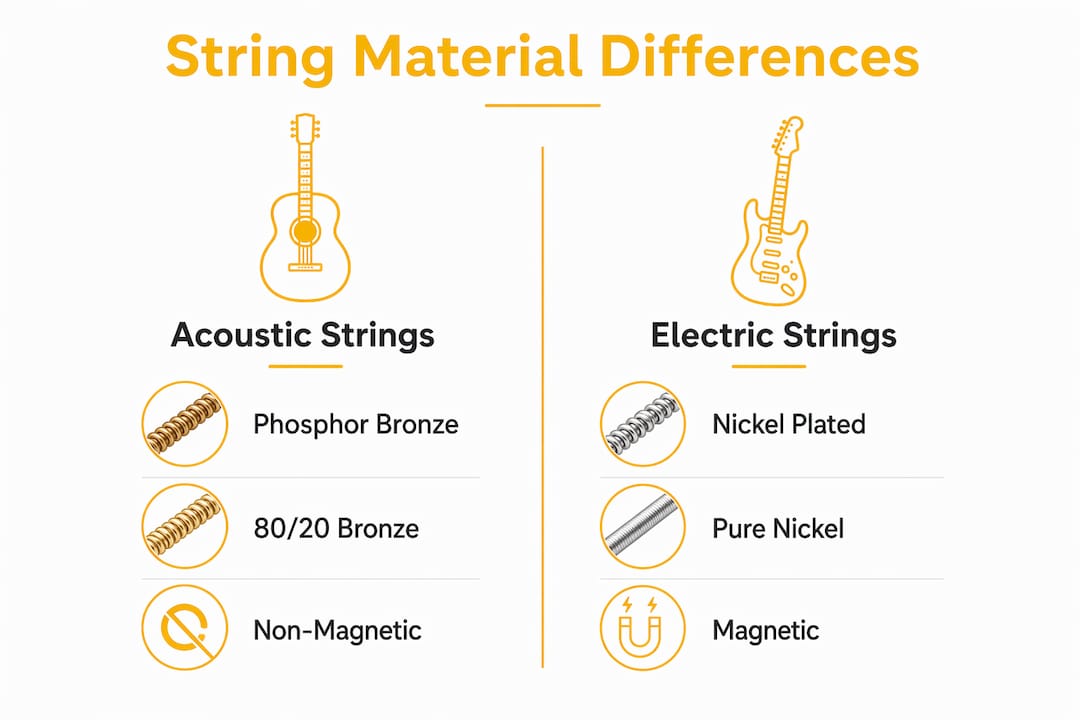
Phosphor bronze acoustic strings produce a warm, balanced tone and resist corrosion well, giving them a longer lifespan than their 80/20 bronze counterparts. 80/20 bronze strings, sometimes called brass strings, deliver a brighter, more traditional acoustic tone but tend to age faster. Monel, a nickel-copper alloy, is a less common acoustic winding material with a warmer, vintage character. None of these materials are magnetic, which is why they produce almost no signal through an electric pickup.
On the electric side, pure nickel strings produce a warmer tone compared to nickel-plated steel, which is brighter and more durable. Stainless steel windings are the brightest of all and resist corrosion exceptionally well, though some players find them harder on frets. The roundwound versus flatwound construction also shapes the feel and tone. Roundwound strings are the standard for most electric players, offering brightness and articulation. Flatwound strings, popular in jazz, produce a mellower, smoother sound with less finger noise.
| Material | Guitar Type | Magnetic? | Tonal Character |
|---|---|---|---|
| Phosphor bronze | Acoustic | No | Warm, balanced, long-lasting |
| 80/20 bronze | Acoustic | No | Bright, traditional, ages faster |
| Nickel-plated steel | Electric | Yes | Bright, articulate, durable |
| Pure nickel | Electric | Yes | Warm, creamy, vintage feel |
| Stainless steel | Electric | Yes | Very bright, corrosion-resistant |
Pro Tip: If you play an acoustic-electric guitar, phosphor bronze strings are generally the best choice. They sound great unplugged and work well with undersaddle piezo pickups, which do not rely on magnetism.
How do acoustic and electric string gauges compare?
String gauge affects tone, playability, and neck tension in ways that matter both immediately and over the long term. Choosing the wrong gauge for your guitar type can cause tuning instability, neck bow, or premature wear on the nut and bridge.
Acoustic string gauges are categorised as Extra Light, Custom Light, Light, Medium, and Heavy. Beginners often benefit from lighter sets such as .010s or .011s, which are easier on the fingertips. Heavier sets like .013s deliver more volume and sustain but require noticeably more finger strength. For a deeper look at which thickness suits your playing, Musicstreet’s guide on acoustic string gauges covers the trade-offs in practical detail.
Electric string gauges follow a similar naming convention but sit in a lighter range overall:
- .008s (Extra Super Light): Very low tension, easy bending, popular with lead players
- .009s (Super Light): The most common electric gauge, balancing playability and tone
- .010s (Regular Light): Fuller tone with slightly more resistance, favoured by rhythm players
- .011s (Medium): Common in blues and jazz, or for players who tune down
- .012s and above: Heavy tension, used for drop tunings or slide playing
Heavier gauges on an acoustic drive the soundboard harder, producing more volume and a fuller low end. On an electric, heavier gauges add sustain and warmth but reduce the ease of string bending. Musicstreet’s guide on why gauge matters explains how to match gauge to your playing style across both guitar types.
Pro Tip: Never jump more than one gauge category at a time without having your guitar set up by a technician. A significant change in string tension can pull the neck out of alignment and affect intonation.
What happens if you use the wrong string type?
The consequences of mixing string types range from disappointing tone to genuine hardware problems. This is one of the most common mistakes guitarists make, particularly when switching between instruments.
Electric strings on an acoustic guitar produce a thin, metallic sound with poor projection. The lighter gauge and different material simply cannot drive the acoustic soundboard with enough force to generate meaningful volume or warmth. The guitar will feel easier to play, but it will sound hollow and weak, particularly in the mid and low frequencies.
Acoustic strings on an electric guitar create an even more dramatic problem. Because bronze windings are not magnetic, the pickups detect almost no signal from the wound strings. The result is an extremely quiet, unbalanced output. The plain steel treble strings may still register, but the wound bass strings will be nearly silent through an amplifier.
Here is a summary of the practical consequences:
- Thin tone on acoustic: Electric strings lack the mass and material properties to resonate the soundboard properly.
- Near-silent electric output: Bronze windings produce minimal magnetic response, making most strings inaudible through pickups.
- Nut slot issues: Heavier acoustic strings may not fit the nut slots on an electric guitar, causing binding or tuning problems.
- Tension mismatch: Heavier acoustic gauges can place excessive tension on an electric guitar’s neck, potentially causing long-term damage.
- Tonal imbalance: Even if some sound is produced, the tonal balance across strings will be inconsistent and unpredictable.
Using correct strings for your guitar type protects both the instrument and the quality of your sound. The right strings maintain appropriate tension, support proper intonation, and extend the life of the nut, bridge, and neck.
How to choose the right guitar strings for your playing style
Choosing strings well means matching material and gauge to three things: your guitar’s construction, your musical style, and your physical comfort.
Start with the basics. If you play an acoustic guitar, you need acoustic strings. Phosphor bronze is the most versatile choice, offering warmth and longevity. If you prefer a brighter, more cutting tone for strumming folk or country, 80/20 bronze is worth trying. For a full breakdown of how each material shapes your sound, Musicstreet’s acoustic string material guide is a thorough starting point.
For electric players, the choice between nickel-plated steel and pure nickel comes down to genre and personal preference. Nickel-plated steel suits rock, pop, and country where brightness and clarity are priorities. Pure nickel suits blues, classic rock, and vintage tones where warmth matters more. Stainless steel is worth considering if you play in humid conditions or sweat heavily, as it resists corrosion better than nickel-based strings. Musicstreet’s roundup of electric guitar string options covers the leading choices in detail.
Gauge selection should reflect your playing style honestly. If you play lead guitar with frequent bends and fast runs, lighter gauges reduce fatigue and increase speed. If you strum hard, play rhythm, or tune down, heavier gauges give you more body and stability. Beginners on acoustic guitars should start with .010s or .011s to build calluses without unnecessary pain. Experienced players who want more volume and sustain can move to .012s once their technique and finger strength develop.
A few practical points worth keeping in mind:
- Change strings regularly. Dead strings lose brightness and intonation accuracy, regardless of type.
- Test before committing. Buy single sets of different gauges or materials before purchasing in bulk.
- Consider your guitar’s setup. A guitar set up for .009s will need adjustment if you switch to .011s.
- Match strings to your genre. Flatwound electric strings suit jazz but feel wrong for rock. Phosphor bronze suits fingerpicking but can feel stiff for aggressive strumming.
Key takeaways
Acoustic and electric guitar strings are fundamentally different in material, gauge, and function, and using the wrong type on either instrument will compromise your sound and potentially damage your guitar.
| Point | Details |
|---|---|
| Material defines function | Acoustic strings use bronze alloys; electric strings require magnetic materials like nickel-plated steel. |
| Gauge affects tone and tension | Acoustic gauges run heavier to drive the soundboard; electric gauges run lighter to suit amplified play. |
| Cross-use causes real problems | Bronze strings on an electric produce near-silent output; electric strings on an acoustic sound thin and weak. |
| Match strings to your style | Choose gauge and material based on genre, finger strength, and whether you prioritise bending or volume. |
| Correct strings protect your guitar | Wrong string tension can damage the nut, bridge, and neck over time. |
Why string choice is the most underrated decision in your setup
Most guitarists spend hours researching guitars and amplifiers, then grab whatever strings are on the shelf. That is a mistake I have seen repeatedly, and it consistently holds players back from getting the best from their instrument.
The tonal difference between phosphor bronze and 80/20 bronze on an acoustic guitar is immediately audible. One sounds warm and rounded; the other cuts through a mix with clarity. Neither is wrong, but choosing without intention means you are leaving tone on the table. The same applies to electric strings. Swapping from nickel-plated steel to pure nickel on a vintage-style guitar can transform a brittle, harsh tone into something genuinely musical.
The misconception I encounter most often is that strings are interchangeable across guitar types. Players assume a string is a string. The reality is that the material science behind acoustic and electric strings is genuinely different, and those differences exist for good reason. Bronze does not interact with magnetic pickups. Nickel-plated steel does not have the mass to move an acoustic soundboard. These are not minor tonal preferences. They are fundamental incompatibilities.
My honest advice is to treat your first string change on a new guitar as an experiment. Try the manufacturer’s recommended gauge and material, then adjust from there based on what you hear and feel. Small changes in gauge or material reveal a great deal about what your guitar is capable of. Listen carefully, and do not be afraid to go back to basics if something does not sound right.
— Music
Find your perfect strings at Musicstreet
Whether you play acoustic, electric, or both, having the right strings on your guitar makes a genuine difference to your sound and comfort.

Musicstreet stocks a carefully selected range of acoustic and electric guitar strings from trusted brands, alongside expert advice to help you choose the right gauge and material for your instrument and playing style. The team at Musicstreet’s guitar shop understands that string choice is personal, and they are on hand to guide you whether you are buying online or visiting the store in Huntingdon, Cambridgeshire. Browse the full range, get a professional setup, and make sure your guitar is performing exactly as it should.
FAQ
Can you use acoustic strings on an electric guitar?
Acoustic strings use non-magnetic bronze windings, which means electric pickups detect almost no signal from them. The result is a very quiet, unbalanced output that makes the guitar effectively unplayable through an amplifier.
What is the most common electric guitar string gauge?
The most popular electric guitar string gauge is .009 to .042, which balances ease of bending with a full enough tone for most playing styles.
Do acoustic and electric strings feel different to play?
Acoustic strings are generally heavier and feel stiffer under the fingers, while electric strings are lighter and easier to bend. The difference is noticeable immediately when switching between the two.
How often should i change my guitar strings?
Most players benefit from changing strings every one to three months, depending on how frequently they play and how much they perspire. Dead strings lose tonal brightness and intonation accuracy regardless of type.
What is the best acoustic guitar string material for beginners?
Phosphor bronze is the best starting point for most beginners. It offers a warm, balanced tone, resists corrosion well, and is available in lighter gauges that are kinder on fingertips during the early stages of learning.









Share:
Guitar websites: your guide to buying, learning, and community
Electric guitar pickups explained: a complete guide