


Finding the perfect guitar strap often gets overlooked by british players, yet more than 60 percent report discomfort after just an hour of playing. Comfort and durability are vital whether you gig across England, rehearse in a small London flat, or join mates for a weekend jam session. This guide reveals what truly matters when choosing a strap so every chord feels natural and secure no matter where you play.
Table of Contents
- Step 1: Assess Your Playing Environment
- Step 2: Choose Suitable Strap Materials And Widths
- Step 3: Determine The Ideal Strap Length For Comfort
- Step 4: Check For Durability And Security Features
- Step 5: Test Strap Fit And Comfort With Your Guitar
Quick Summary
| Key Point | Explanation |
|---|---|
| 1. Assess your playing environment | Understand where you typically play to choose the right guitar strap for comfort and performance needs. |
| 2. Choose suitable strap materials and widths | Consider the material and width of the strap to enhance comfort, with leather for durability and nylon for affordability. |
| 3. Determine the ideal strap length | Adjust strap length according to your height and playing style to ensure proper posture and comfort during play. |
| 4. Check for durability and security features | Look for high-quality materials and secure attachments to ensure your guitar is safe during performances and transport. |
| 5. Test strap fit and comfort with your guitar | Experiment with adjustments while playing to find your optimal strap fit that supports natural movement without strain. |
Step 1: Assess your playing environment
Selecting the right guitar strap requires understanding exactly how and where you play. Your playing environment dramatically influences the type of strap you’ll need, whether you perform on stage, practise at home, or jam with friends in different settings.
Start by considering the physical spaces where you typically play guitar. A musician performing energetic rock gigs will need a dramatically different strap compared to someone playing acoustic sessions in their living room. Weight distribution, length, and material become critical factors depending on your performance context. For classical guitarists practising seated, a lightweight strap with minimal bulk works best. Conversely, touring musicians require robust straps that can withstand constant movement and potential stage impact.
Pay attention to your personal playing posture and instrument type. Electric guitars often demand different strap characteristics compared to acoustic models. Consider your height, shoulder width, and how you naturally hold the instrument. Shorter players might need adjustable straps that prevent the guitar from hanging too low, while taller musicians require longer configurations to maintain comfortable playing positions.
Expert advice: Always test your guitar strap in the exact environment where you’ll be performing to ensure maximum comfort and functionality.
Step 2: Choose suitable strap materials and widths
Selecting the right guitar strap involves understanding how different materials and widths impact your playing comfort and instrument support. Guitar strap material choice significantly affects your overall playing experience, making it crucial to evaluate your specific needs carefully.
Leather straps offer exceptional durability and a classic aesthetic that many musicians appreciate. They typically provide robust support for heavier instruments and conform nicely to your body over time. Nylon straps present a lightweight alternative perfect for musicians seeking affordability and versatility. Padded options become invaluable for players experiencing shoulder strain or performing lengthy sets. The width of your strap plays an equally important role wider straps distribute instrument weight more evenly across your shoulder, reducing fatigue during extended playing sessions.
Consider your playing style and instrument type when making your selection. Acoustic guitarists might prefer thinner straps with minimal bulk, while electric musicians performing high-energy rock shows will benefit from wider, more supportive designs. Your personal comfort should always be the primary consideration weight distribution, material flexibility, and overall ergonomics matter more than aesthetic preferences.
Expert advice: Test multiple strap materials and widths before committing to ensure maximum playing comfort and instrumental support.
Here is how different guitar strap materials compare for various needs:
| Material | Comfort Level | Durability | Best Use Case |
|---|---|---|---|
| Leather | Moulds to shoulder | Extremely robust | Heavy guitars, stage use |
| Nylon | Lightweight feel | Moderately durable | Casual play, portability |
| Padded Foam | High on comfort | Varies by quality | Extended sessions, long gigs |
| Canvas | Breathable, soft | Average lifespan | Home practice, light travel |
Step 3: Determine the ideal strap length for comfort
Finding the perfect guitar strap length requires careful consideration of your unique playing style and physical dimensions. Strap length fundamentally impacts your playing posture and overall comfort, making it crucial to measure and adjust with precision.

To determine your ideal strap length, start by measuring from one strap button to the other while holding your guitar in your standard playing position. Taller musicians typically require longer straps to prevent hunching, while shorter players need more compact configurations. Your preferred playing style dramatically influences the optimal length. Rock musicians often prefer longer straps allowing more dynamic movement, whereas classical guitarists might opt for shorter lengths providing more controlled positioning.
Consider how the strap length affects your body mechanics and instrument accessibility. A well-adjusted strap should allow your guitar to rest comfortably against your body without forcing awkward shoulder or wrist positions. Electric and acoustic guitars might require slightly different length approaches based on their body shape and weight distribution. Pay attention to how the strap feels during both seated and standing positions, ensuring seamless transitions between playing styles.
Expert advice: Always keep spare adjustment holes or a versatile strap to accommodate different playing scenarios and prevent unexpected discomfort during performances.
Step 4: Check for durability and security features
Evaluating a guitar strap goes far beyond aesthetic appeal. High-quality guitar straps demand robust materials and secure attachment mechanisms that protect your precious instrument during performances and transportation.
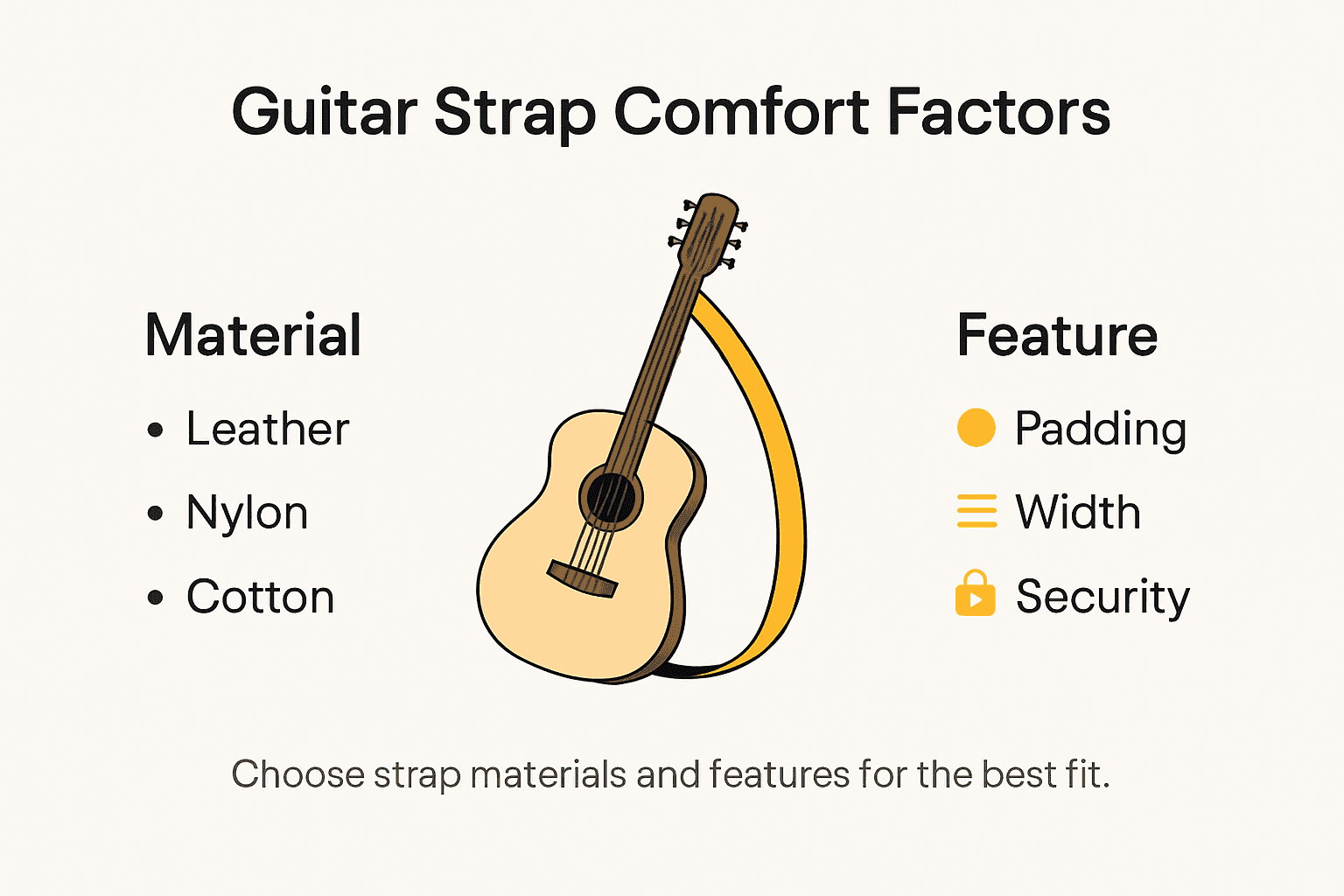
Prioritise straps constructed from premium materials like thick leather or sturdy nylon webbing. These materials provide superior strength and resistance to wear. Look for reinforced leather ends and metal buckles that can withstand repeated stress. Locking mechanisms are crucial for preventing accidental drops especially during energetic performances. Some advanced straps feature additional security clips or integrated stabilisation points that provide extra insurance against unexpected instrument slippage.
Consider the specific demands of your playing style when assessing durability. Acoustic and electric guitarists might require different levels of structural support. Touring musicians need straps that can endure frequent movement and potential rough handling, while studio musicians might prioritise comfort and precision. Pay attention to stitching quality, metal component strength, and overall construction integrity. A well-crafted strap should maintain its shape and functionality even after extensive use.
Expert advice: Regularly inspect your guitar strap for signs of wear and replace it proactively before potential equipment failure during a performance.
The following table summarises key strap features to check for lasting security and reliability:
| Feature | Why It Matters | Typical Application |
|---|---|---|
| Reinforced Ends | Prevent accidental detachment | Touring, energetic performing |
| Locking Mechanism | Stops guitar drops | Stage, standing movement |
| Metal Hardware | Withstands repeated stress | Frequent adjustment, travel |
| Quality Stitching | Maintains structure over time | All players, daily practice |
Step 5: Test strap fit and comfort with your guitar
Perfecting your guitar strap fit requires a methodical approach that combines careful adjustment and personal experimentation. Guitar strap fitting techniques can dramatically improve your playing experience, making it essential to invest time in finding the right configuration.
Begin by attaching the strap to both buttons on your guitar and standing in your typical playing position. Adjust the length so that the instrument sits comfortably against your body without forcing your shoulders or wrist into unnatural positions. Pay close attention to how the guitar feels when you move between seated and standing positions. Some musicians prefer a slightly higher or lower hanging position depending on their playing style rock guitarists often opt for lower positions that allow more dynamic movement, while classical performers might choose a more elevated placement.
Experiment with different strap lengths and angles to find your personal sweet spot. Walk around with the guitar strapped on, strum different chords, and simulate performance movements to assess overall comfort. Notice how subtle adjustments can prevent strain during extended playing sessions. The ideal strap should feel like an extension of your body providing support without restricting your natural playing motion.
Expert advice: Always bring your guitar when purchasing a new strap to ensure the most accurate and personalised fitting possible.
Find Your Perfect Guitar Strap for Unmatched Comfort and Support
Choosing the right guitar strap is essential for every musician seeking ultimate comfort and secure fit during practice or performances. As highlighted in the guide on “How to Select Guitar Straps for Ultimate Comfort and Fit” you understand the importance of factors like material durability, strap length, and secure attachments that protect your instrument and enhance your playing experience. If shoulder strain, awkward posture, or unreliable straps have ever held you back from enjoying your music fully then this is your moment to upgrade.

At MusicStreet, we offer a carefully curated selection of premium guitar straps designed to suit electric, acoustic, and bass guitars with personalised fitting advice and expert support. Explore our range of durable leather, padded, and nylon straps that provide excellent weight distribution and stability for lengthy playing sessions. Benefit from our professional setup service and ongoing guidance to find the ideal strap length and fit that complements your unique playing style and body mechanics. Don’t settle for discomfort or risk instrument damage when you can shop with confidence backed by competitive pricing and free UK delivery on qualifying orders. Start enhancing your musical journey today by visiting MusicStreet and discover accessories that truly make a difference to your comfort and performance.
Take the next step and secure your perfect guitar strap now with MusicStreet’s trusted selection to experience playing without limits.
Frequently Asked Questions
How can I assess my playing environment when choosing a guitar strap?
Understanding your playing environment is crucial for selecting the right guitar strap. Evaluate the physical spaces where you typically perform or practise, and consider how your posture and instrument type impact your strap choice. Test your strap in the exact environment where you’ll play to ensure it meets your needs for comfort and functionality.
What materials are best for guitar straps to ensure comfort?
The best guitar strap materials depend on your comfort and playing style. Leather offers durability and conforms to your body, while nylon is lightweight and affordable. For extended sessions, padded straps provide additional comfort; therefore, consider trying several materials to find what feels best for you.
How do I determine the correct length for my guitar strap?
Finding the right strap length involves measuring from one strap button to the other while holding your guitar. Adjust the strap so the guitar rests comfortably against your body, allowing for natural movement without straining your shoulders or wrists. Regularly check your strap length during performances to ensure optimal comfort.
What features should I look for in a durable guitar strap?
When evaluating a guitar strap, focus on reinforced ends and sturdy materials like thick leather or durable nylon webbing. Ensure that it has secure attachment mechanisms, such as locking features, to prevent accidental drops during performances. Inspect the stitching quality to ensure the strap maintains its structure over time.
How can I test the fit and comfort of a guitar strap effectively?
To test the fit of your guitar strap, attach it to your guitar and stand in your typical playing position. Adjust the length for comfort, ensuring your wrists and shoulders remain relaxed while playing. Move around and strum different chords to assess any discomfort, making necessary adjustments until you find your ideal fit.
What should I do if I experience discomfort with my guitar strap during practice?
If you encounter discomfort while using your guitar strap, first check if it’s adjusted properly for your height and playing style. Experiment with different strap lengths and materials to find a more comfortable option. Consider using a padded strap if you play for extended periods, as this can significantly reduce shoulder strain.






Share:
Why High End Guitars Matter for Serious Musicians
What Is a Patch Cable and Its Impact on Your Sound