

Acoustic vs. Electric Guitars: Your Beginner's Guide to the Key Differences

Deciding between an acoustic and an electric guitar is a big first step that impacts how you play, the sounds you make, what gear you'll need, and your budget right from the start. Many beginners wonder about the main differences between these two types of guitars and which one will best suit their musical dreams and feel most comfortable in their hands. This guide breaks down the essentials, offering clear explanations, a look at how they feel to play, their unique sounds, what you'll need to buy, how to look after them, and our top picks from Music Street to help you make your first guitar purchase with confidence.
We'll start by defining each type of guitar and what they have in common. Then, we'll dive into how they feel to play, looking at the neck, strings, action, and body size. Next, we'll compare their natural sounds versus amplified tones and which genres they're best suited for. We'll also cover pricing, essential accessories, and value bundles. After that, we'll touch on maintenance and durability, leading into a straightforward guide to help you choose. Finally, discover Music Street's favourite beginner acoustic and electric models, and learn how to get personalised advice and support.
What Are Acoustic and Electric Guitars? Simple Definitions for New Players
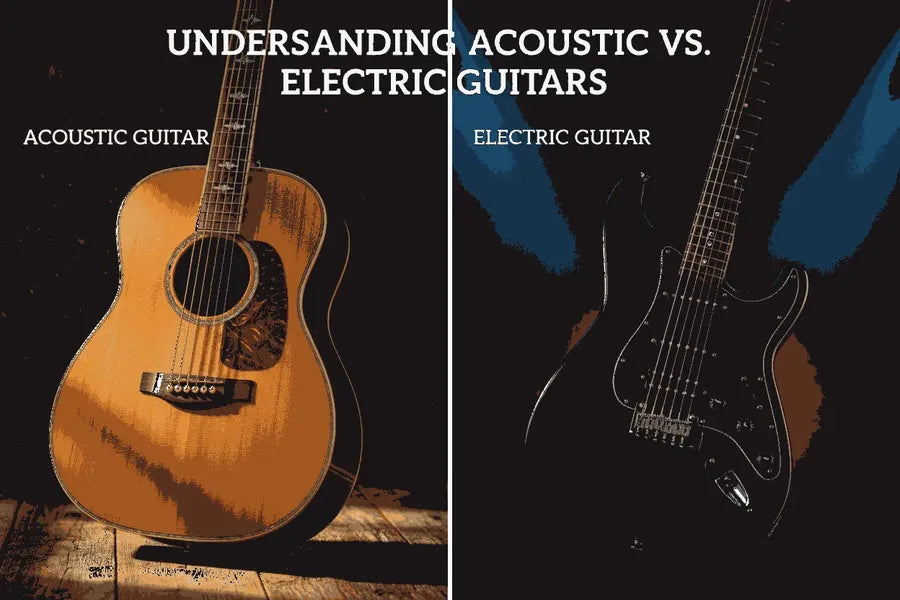
An acoustic guitar is a stringed instrument with a hollow body that naturally amplifies the sound of the strings through its soundboard and internal air space, no external power needed. This makes it perfect for playing unplugged and great for building finger strength. An electric guitar, on the other hand, uses magnetic pickups to turn string vibrations into an electrical signal, which then goes to an amplifier to control volume and tone. This offers a huge range of sounds and is often easier to play thanks to lighter strings and lower action.
When you look past their sound-making methods, you'll find they share core features: six steel strings, standard tuning, fretted necks for playing notes, and fundamental chord shapes. Understanding these basics is key before we explore how they differ in comfort, sound, cost, and care.
What is an Acoustic Guitar and How Does It Make Sound?
An acoustic guitar has a hollow wooden body, a soundhole, and a bridge that transfers the string vibrations directly to the soundboard, creating natural sound. This design boosts sustain and volume organically, making it ideal for singer-songwriters and folk music without needing any extra equipment.
By resonating within its body, the acoustic guitar helps develop finger strength and control over dynamics. This encourages precise technique as beginners learn chords and strumming. Its natural, warm, and full-bodied sound is perfect for genres like folk, country, and singer-songwriter music.
What is an Electric Guitar and How Does It Work?
An electric guitar uses pickups—magnetic coils positioned under the strings—to convert string vibrations into an electrical signal. This signal is sent through a cable to an amplifier, which boosts the volume and shapes the tone. You can also use effects pedals between the guitar and amp to add distortion, reverb, delay, or chorus, opening up a vast sonic world for rock, blues, jazz, and metal.
This electronic sound production allows for lighter string gauges, lower action, and slimmer neck profiles, which reduce finger strain and make playing faster passages easier. By adjusting amp settings and pedal effects, players can easily dial in tones ranging from crystal-clear to gritty overdrive.
What Do Acoustic and Electric Guitars Have in Common?
- Six main steel strings, usually tuned E-A-D-G-B-E.
- Fretted necks that allow you to play notes with precise pitch changes.
- Standard chord shapes and scales that can be used on both types.
- A headstock with tuning pegs to keep the strings at the right tension.
- A bridge that anchors the strings to the body and transfers vibrations (either mechanically or electrically).
Because they share these fundamental elements, the skills you learn on one type of guitar will transfer to the other. This means you can easily explore both styles as your musical tastes grow.
What Are the Main Playability Differences Between Acoustic and Electric Guitars?

The way a guitar plays comes down to its neck shape, string thickness, string height (action), and body size. These factors all affect how comfortable a beginner will find it to learn and play.
The table below compares these features to help new players figure out which instrument might feel easier to start with.
| Feature | Acoustic Guitar | Electric Guitar |
|---|---|---|
| Neck Thickness | Generally thicker for structural integrity | Often slimmer for quicker fretting |
| String Gauge | Heavier steel strings (typically 0.012–0.054 inches) | Lighter gauge steel strings (typically 0.009–0.046 inches) |
| Action Height | Usually higher to maximise resonance | Typically lower to reduce finger pressure needed |
| Body Size | Larger, hollow body | Sleeker, often contoured solid body |
How Do Neck Shape and String Gauge Affect Beginner Comfort?
An electric guitar's slimmer neck profile means less stretching for your hand and faster chord changes. Lighter strings also require less pressure from your fingertips, which means less soreness. Acoustic guitars often have wider necks and heavier strings. While these help build finger strength, they can be a bit tougher for absolute beginners, especially when tackling barre chords.
Finding the right balance between building strength and staying comfortable is key to consistent practice and avoiding early frustration. Many players with smaller hands find electric guitars a bit more forgiving to start with.
A cross-sectional study revealed that 81% of guitar players experience musculoskeletal problems. Acoustic guitar players reported the highest prevalence at 83%, compared to 74% for electric guitar players, with the left fingers and wrist being the most commonly affected areas.
andysmusic.com
Why Is Guitar Action Important for Beginners?
Guitar action refers to how high the strings sit above the fretboard. Lower action on electric guitars means you need less force to press the strings down, making techniques like slides and bends feel smoother. Acoustic guitars often have slightly higher action to get the best sound, which can mean more finger strain when fretting notes. While this helps build dexterity, it can put off new players if it's too high.
Both types of guitars have adjustable truss rods, allowing technicians to set the action perfectly for a student's hand strength and playing style, ensuring a comfortable learning experience.
How Does Body Size Affect Comfort and Handling?
Acoustic guitars with larger bodies, like dreadnoughts and jumbos, produce a big sound but can feel a bit bulky when you're sitting down to play. Smaller models, such as parlors or 3/4-size guitars, offer a lighter and more compact feel. Electric guitars typically have slim, ergonomic bodies, often with cutaways that give you easy access to the highest frets. Their balanced weight distribution makes them comfortable for playing while standing or sitting for longer periods.
It's a good idea for beginners to try out different body shapes in a store to see how each one feels with their posture and how they move.
Which Guitar Type Is Easier for Small Hands and Beginners?
Electric guitars with shorter scale lengths (like 24.75 inches) and narrower nut widths are often easier for smaller hands. They allow for quicker finger placement and easier chord formation. Beginners with smaller hands playing acoustic guitars might prefer a 3/4-size acoustic or a classical guitar with nylon strings, which have less tension and require less force to press down.
Choosing an instrument that fits your hand size well can boost your confidence and help you develop your skills steadily.
How Do Sound and Tone Differ Between Acoustic and Electric Guitars?
The unique sound of each guitar comes from its construction and how it produces sound. Acoustic guitars rely on natural resonance, while electric guitars use amplification and effects to shape their sound. Understanding these differences can help beginners find the musical styles that best suit each instrument's voice.
What Is Natural Resonance and How Does It Define Acoustic Sound?
Natural resonance happens when the acoustic guitar's hollow body and soundboard amplify the string vibrations, creating a warm, organic tone that's rich in overtones and sustain. This process allows for a wide range of dynamics, from gentle fingerpicking to powerful strumming, all without needing any external gear. It's the perfect sound for unplugged performances and singer-songwriter arrangements.
The pure sound of acoustic resonance encourages beginners to focus on developing finger strength and dynamic control, leading to more expressive playing.
How Do Pickups and Amplifiers Shape Electric Guitar Tone?
Pickups capture string vibrations as electrical signals, which are then sent to an amplifier that boosts the volume and lets you adjust the EQ. Effects pedals placed between the guitar and amp can add sounds like distortion, delay, chorus, and more. By choosing different types of pickups (single-coil, humbucker, or active) and tweaking amp settings, players can create a wide variety of tones, from bright and clean to heavily distorted, perfect for rock, blues, or metal.
This electronic flexibility makes it easy to experiment and switch between different styles quickly without changing instruments.
What Musical Genres Suit Acoustic vs. Electric Guitars?
Acoustic Guitar Genres:
- Folk
- Country
- Singer-Songwriter
- Flamenco
- Soft Rock
Electric Guitar Genres:
- Rock
- Pop
- Blues
- Jazz
- Metal
Can You Play the Same Songs on Both Guitar Types?
Absolutely! The repertoire for both acoustic and electric guitars overlaps significantly. Many fingerstyle pieces, chord progressions, and riffs can be adapted from one to the other. While an electric guitar might need specific amp settings and effects to mimic an acoustic's clean tone, and an acoustic might not capture the full sustain of an electric ballad, the core techniques like strumming, chord shapes, and scales remain consistent across both.
This versatility means learners can easily switch between guitar styles as their tastes and equipment change.
What Are the Cost and Equipment Considerations for Beginners Choosing Acoustic or Electric Guitars?
When planning your budget, consider the initial cost of the guitar, essential accessories, and the value of bundles. Acoustic guitars often have a lower starting price, while electric guitars require additional gear like an amplifier and cable.
| Expense Element | Acoustic Guitar | Electric Guitar |
|---|---|---|
| Beginner Model Price | £80–£200 | £100–£250 |
| Amplification | Not required | £60–£150 (for a practice amp) |
| Accessory Needs | Tuner, picks, strap, case | Tuner, picks, strap, case, cable |
| Bundle Deals | £120–£250 (often includes case & strap) | £180–£350 (typically includes amp, cable & gig bag) |
How Do Initial Costs Compare Between Acoustic and Electric Guitars?
Entry-level acoustic guitars usually start around £80 and come with fewer essential accessories. Electric guitars might start at £100, but you'll need to buy an amplifier and cable separately, adding £60–£150 to the total cost. Bundles that include the guitar, amp, cable, and accessories often provide the best value for beginners looking for a complete setup.
What Additional Equipment Is Needed for Electric Guitars?
For an electric guitar setup, you'll need:
- A guitar amplifier (a combo amp or a modeling amp)
- An instrument cable (around 3–6 meters long)
- Optional effects pedals for different sound textures
- Headphones or a practice feature that's safe for your ears
- A power supply and any necessary patch cables
What Essential Accessories Should Beginners Consider?
Every beginner's kit will benefit from these items:
- Tuner – Crucial for keeping your guitar in tune and developing your ear.
- Picks – Available in various thicknesses and materials to suit different playing styles.
- Strap – Essential for playing comfortably while standing.
- Gig Bag or Hard Case – Protects your instrument during transport and storage.
- Cleaning Kit – Helps maintain the guitar's finish, remove fingerprints, and keep the fretboard in good condition.
Are Beginner Guitar Bundles a Good Investment?
Beginner bundles that bundle together a guitar, case, tuner, strap, and (for electrics) an amp and cable can save you money and hassle compared to buying everything separately. They simplify the gear selection process and often feature reliable brands, making them a very attractive option for anyone wanting a complete, ready-to-play package.
How Do Maintenance and Durability Differ for Acoustic and Electric Guitars?

Regular care is vital for keeping your guitar sounding great, playing well, and lasting for years. Acoustic guitars need attention to humidity and wood care, while electric guitars require maintenance of their electronics along with the usual string changes.
What Are the Key Maintenance Tasks for Acoustic Guitars?
Essential care for acoustic guitars includes:
- Humidity Control – Use a room humidifier or a case humidifier to keep the humidity level between 45% and 55%.
- String Replacement – Change your strings every 2–3 months to maintain good tone and playability.
- Surface Cleaning – Wipe down the body and fretboard with a soft cloth after each playing session.
- Bridge and Nut Inspection – Check for any wear or grooves that might affect tuning stability.
An official bulletin from Martin Guitars highlights that wood, a porous organic substance, naturally expands with moisture and contracts when dry. Maintaining an optimal relative humidity of 50% is crucial for preserving wooden instruments like guitars, thereby mitigating risks such as swelling, shrinking, and cracking.
sweetwater.com
How Is Electric Guitar Maintenance Different?
- Electronics Check – Make sure the output jack, potentiometers (pots), and pickups are free from dust and corrosion.
- Amp Servicing – Keep input jacks clean and ensure cable connections are secure to prevent signal problems.
- String Changes – Replace strings every 4–6 weeks for the best tone transmission through the pickups.
- Hardware Tightening – Periodically check and tighten strap buttons, screws, and bridge saddles.
How Can Beginners Extend the Lifespan of Their Guitars?
- Store your guitar in an environment with stable humidity.
- Use a quality case or stand to prevent accidental damage.
- Schedule professional setups to adjust the action, intonation, and truss rod.
- Clean your hands before playing to reduce the buildup of sweat and oils.
How Can Beginners Decide Which Guitar Is Right for Them? A Simple Guide
- Think About Your Musical Influences and Favourite Artists Choose a guitar that matches the sounds you love. Folk and singer-songwriter styles often suit acoustics, while rock, blues, and metal are typically played on electrics.
- Consider Your Physical Comfort Think about your hand size, reach, and overall build. Slimmer neck profiles and shorter-scale electric guitars are great for smaller hands, while parlor acoustics and classical guitars offer less string tension.
- Set a Realistic Budget for the Guitar and Accessories Decide if you prefer an all-in-one bundle or buying items separately. Remember to factor in the cost of an amplifier for electric guitars and essential accessories for both.
- Try Guitars In-Store if Possible Get a feel for the neck, string tension, and how the guitar balances. Our expert staff at Music Street can guide you through demonstrations and help you find the perfect setup.
What Are Music Street's Top Recommendations for Beginner Acoustic and Electric Guitars?
At Music Street, we combine expert advice, a wide selection of products, and a smooth online-to-in-store experience to help beginners get off to a great start. Here are our top picks:
Which Acoustic Guitars Are Best for Beginners?
- Fender FA-125: Features a balanced dreadnought body, smooth action, and reliable Fender quality at an affordable price.
- Yamaha FG800: Boasts a solid spruce top, rich sound projection, and a durable rosewood fingerboard for clear resonance.
- Epiphone DR-100: Offers a classic design, a comfortable body size, and a warm sound profile, making it a great entry-level option.
Which Electric Guitars Are Ideal for New Players?
- Yamaha Pacifica 112V: A versatile guitar with an HSS pickup configuration, a comfortable neck, and a solid tremolo system that supports many different styles.
- Squier Affinity Stratocaster: The iconic Strat design, a slim neck, balanced tone, and great value hardware make this a favourite for beginners.
- Epiphone Les Paul Studio: With its thicker mahogany body, dual humbuckers, and warm sustain, it delivers classic rock and blues tones.
What Beginner Guitar Bundles Does Music Street Offer?
- Acoustic Starter Pack: Includes a Yamaha FG800, tuner, gig bag, and strap for a complete unplugged playing experience.
- Electric Essentials Kit: Features a Pacifica 112V, a 10W practice amp, cable, tuner, and picks for a full amplified setup.
- Premium Duo Bundle: Combines an FA-125 acoustic and a Squier Strat with matching gig bags and cleaning kits, perfect for exploring multiple genres.
Where Can Beginners Get Expert Advice and Support?
Music Street offers free consultations in our stores and online, along with detailed maintenance guides, demo videos, and community forums. Visit Music Street to book a one-on-one session or explore our extensive guitar learning resources.
Starting your guitar journey with the right instrument will build your confidence, encourage consistent practice, and fuel your musical passion. Whether you choose the warm, natural sound of an acoustic or the versatile, amplified tones of an electric, the best guitar is the one that makes you excited to pick it up every single day. Start exploring Music Street's beginner range and let our expert guidance help you on your path to musical discovery.









Share:
Top 5 Challenges Beginners Encounter When Selecting Their First Guitar Model Explained
Trade In Your Guitar