


Every beginner electric guitarist needs the same core kit to get started: a guitar, an amp or amp simulator, a 1/4" TS cable, a tuner, picks, a spare set of strings, a strap, a case or gig bag, a capo, and a basic cleaning or tool kit. That covers you from day one.
Budget-wise, a bare-minimum UK setup starts at a low hundred-pound range, while a comfortable starter kit with better gear costs noticeably more. Musicstreet, based in Huntingdon, Cambridgeshire, stocks all of the above and offers professional setup services to make sure your guitar plays as well as it should from the moment you pick it up.
Your beginner electric guitar equipment checklist:
- Electric guitar
- Amp or amp simulator (software or modelling unit)
- Guitar cable (1/4" TS, 3m–3.5m)
- Tuner (clip-on, pedal, or app)
- Picks (plectrums) in a few thicknesses
- Spare set of strings
- Guitar strap
- Case or gig bag (or a guitar stand for home use)
- Capo
- Basic tool and cleaning kit
Key takeaways
A beginner electric guitarist needs a guitar, amp or amp simulator, cable, tuner, picks, spare strings, strap, case or stand, capo, and a basic tool kit, with a UK starter budget of roughly £199–£310 at minimum.
| Point | Details |
|---|---|
| Start with the core five | Guitar, cable, amp or amp sim, tuner, and picks are the non-negotiables before anything else. |
| Budget realistically | A bare-minimum UK setup costs roughly £199–£310; a comfortable starter kit runs £388–£715. |
| Get a professional setup | A setup costing £40–£80 makes even a budget guitar play correctly and improves learning speed. |
| Don’t skip the cable | A quality 3m–3.5m cable with solid jack housings prevents noise and signal loss from day one. |
| Musicstreet for gear and setup | Musicstreet stocks new and pre-owned guitars, accessories, and offers professional setup services from Huntingdon. |
Table of Contents
- What each item on your electric guitar equipment list actually does
- How to choose your first electric guitar
- Amp versus amp simulator: which should you buy first?
- Cables, tuners, strings, picks and the small accessories that actually matter
- Effects pedals and optional kit: what to buy first and what to leave for later
- Starter pack examples and a realistic UK budget breakdown
- Why a professional setup makes your guitar far easier to play
- A short buying checklist to use before you commit
- What Musicstreet usually tells beginners
- Musicstreet can help you get the right gear from the start
- Sources
- FAQ
What each item on your electric guitar equipment list actually does
Fender’s list of 11 essential tools for every guitarist covers tuner, strap, extra strings, picks, capo, case or gig bag, cable and stand. Here is what each one does and why it earns its place in your bag.
- Electric guitar: the instrument itself. Without it, nothing else matters.
- Amp or amp simulator: an electric guitar produces almost no audible sound without amplification. You need either a physical amp or software to hear yourself properly.
- Guitar cable (1/4" TS): the standard mono cable that connects your guitar to your amp. A 3m–3.5m cable gives you room to move without tripping over it.
- Tuner: keeps your guitar in tune. An out-of-tune guitar sounds wrong no matter how well you play.
- Picks (plectrums): most electric players use a pick. Carry a few thicknesses until you find what suits your playing style.
- Spare strings: strings break, often at the worst moment. A spare set of light-gauge strings (typically .009–.042 or .010–.046 for beginners) costs very little and saves a cancelled practice session.
- Guitar strap: lets you play standing up and takes the weight off your fretting hand when sitting.
- Case or gig bag: protects your guitar in transit and at home. A stand is fine for daily home use but offers no protection if the guitar gets knocked over.
- Capo: clamps across the fretboard to change the key without retuning. Useful for songs in awkward keys and for learning chord shapes in different positions.
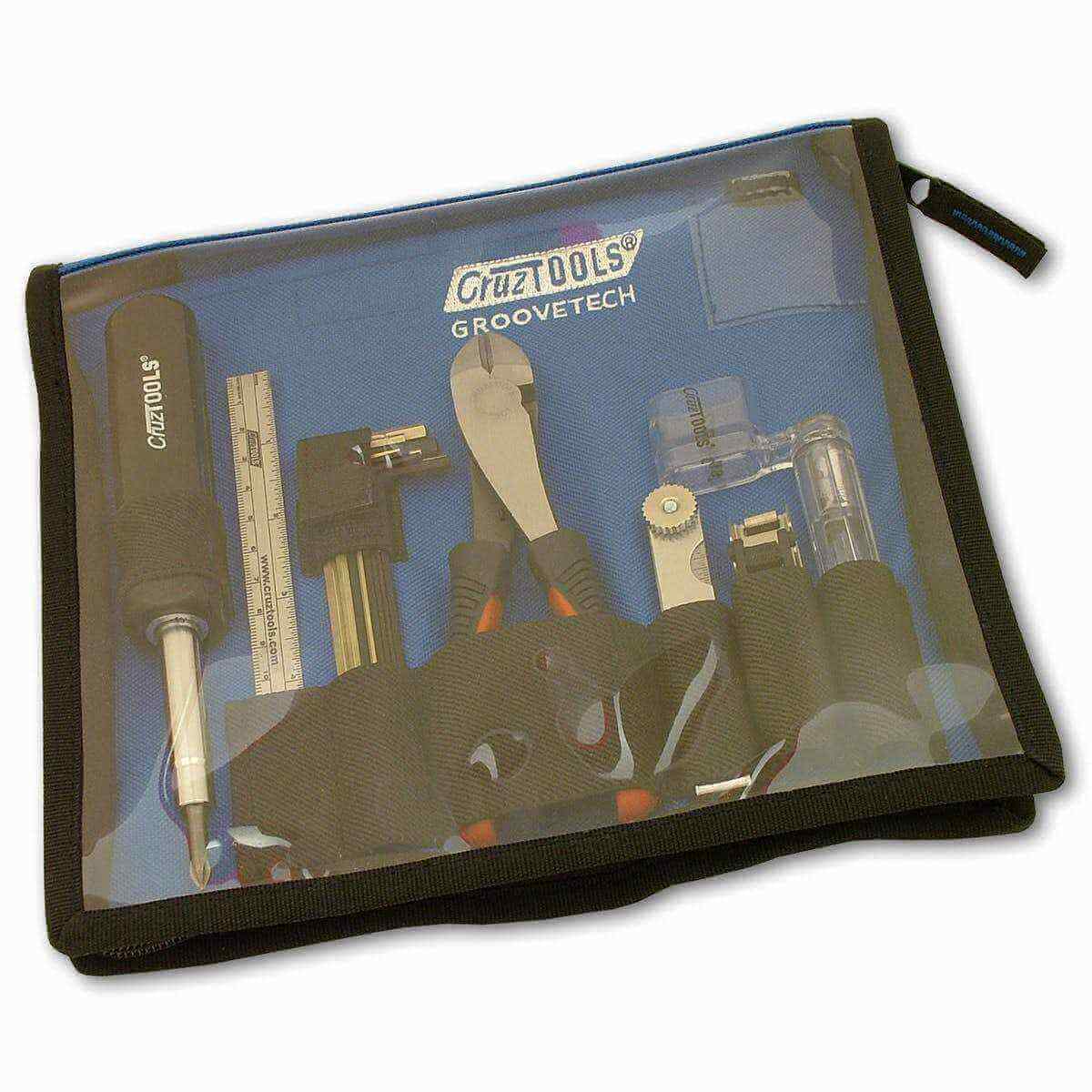
- Basic tool and cleaning kit: a string winder, wire cutters, a microfibre cloth and a small screwdriver cover most day-to-day maintenance needs.
Pro Tip: Buy the guitar, cable, tuner, and a spare set of strings first. Everything else can follow once you are actually playing.
How to choose your first electric guitar
The guitar you start on shapes how quickly you progress. A poorly set-up instrument with high action makes learning harder than it needs to be, regardless of price. Andy Guitar’s beginner course outlines the main body types and pickup configurations worth knowing before you walk into a shop.
Body types
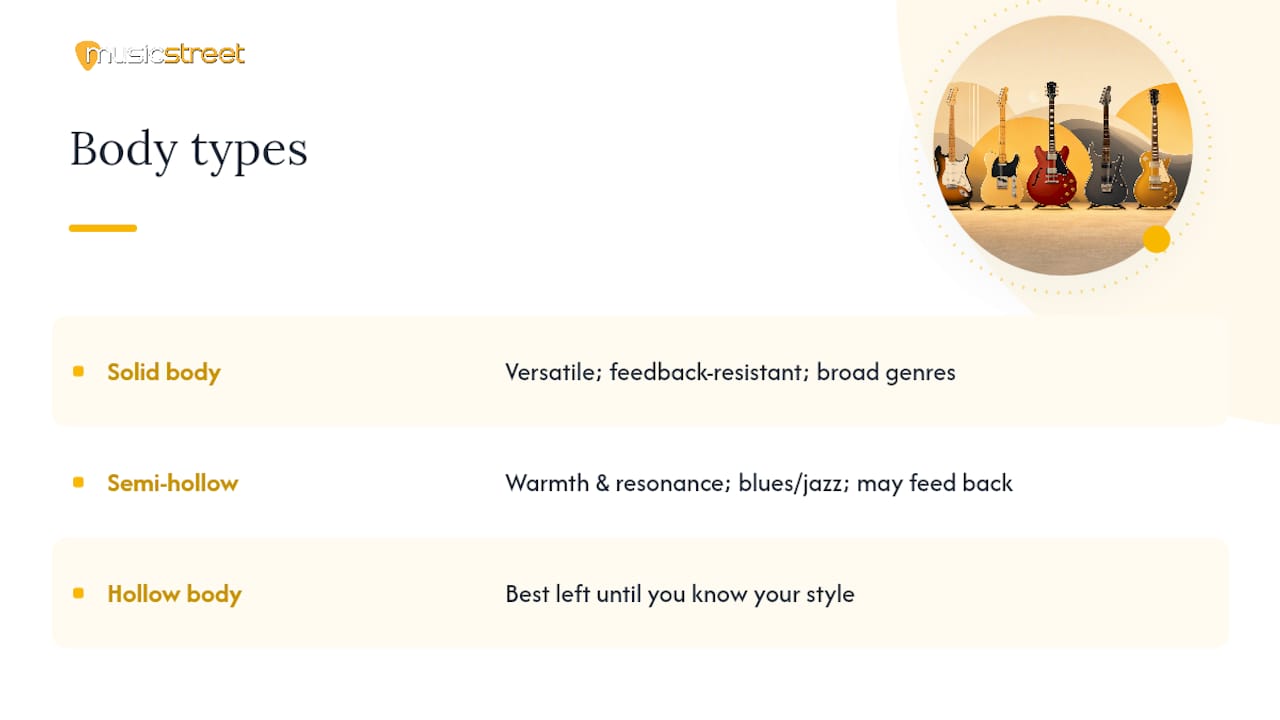
Solid body guitars (think Stratocaster or Telecaster shapes) are the most common starting point. They are versatile, feedback-resistant and suit almost every genre. Semi-hollow guitars add warmth and resonance, which suits blues and jazz but can feed back at high volumes. Hollow body guitars are best left until you know the style you want to pursue.
Pickup types
Single-coil pickups produce a bright, clear tone with a slight hum. Humbuckers are louder, warmer and quieter. Neither is wrong for a beginner; the choice depends on the music you want to play. Rock and metal players often prefer humbuckers; blues and country players tend to reach for single coils.
What to check in the shop
- Action: how high the strings sit above the frets. High action makes fretting painful. Press the strings at the first and last fret simultaneously and check the gap at the 12th fret. It should be small.
- Neck profile: hold the neck as you would while playing. It should feel comfortable in your hand, not awkward.
- Intonation: play the open string, then the same string fretted at the 12th fret. Both notes should be in tune with each other.
- Weight: a heavy guitar gets tiring quickly. Try it sitting and standing.
- Visible damage: check the headstock, nut and body for cracks or signs of poor repair.
For curated beginner electric guitar options with notes on why each works, Musicstreet’s buying guide covers the current market well.
String gauge for beginners: lighter strings (.009–.042) are easier on fingers and require less fretting pressure. Medium gauge (.010–.046) offers slightly better tone and tuning stability. Most beginners start on .009s and move up as their technique develops. A professional setup (covered later) will set the guitar’s action and intonation to match whichever gauge you choose.
Amp versus amp simulator: which should you buy first?
Both work. The right choice depends on your space, budget and how you plan to practise. Marshall recommends a small combo amp in the 1–20 W range for home practice, and explains the differences between valve, solid-state and digital modelling amps clearly.
Physical combo amps
A small solid-state or modelling combo amp is the most straightforward option. You plug in, turn up and play. Modelling amps include built-in effects and amp simulations, which means a beginner can experiment with different tones without buying pedals. The downside is volume: even a 10 W amp can be loud enough to annoy neighbours at night.
Amp simulators
An amp simulator runs as software on a computer or as a standalone unit, and you play through headphones or studio monitors. Neural DSP’s plugin range demonstrates how convincing modern amp simulation has become for home practice and recording. The trade-off is that you need an audio interface to connect your guitar to a computer, which adds to the initial cost. Latency (the tiny delay between playing and hearing the sound) can be an issue with poorly configured interfaces, but most modern audio interfaces handle this well at low buffer settings.
Pro Tip: If you live in a flat or share walls with neighbours, an audio interface and amp simulator is the quietest and most flexible starting point. Plug in headphones, set your buffer size low in your DAW or plugin host, and latency becomes a non-issue.
Cables, tuners, strings, picks and the small accessories that actually matter
Small accessories are where beginners often make poor decisions, either buying the cheapest possible option or buying things they do not need yet. Guitar4Beginners stresses that a quality cable is as important as the amp itself for electric players, and they are right.
Guitar cables
A 1/4" TS (tip-sleeve) mono cable is the standard connection between guitar and amp. For home practice, a 3m cable is usually enough. If you plan to move around a stage at any point, 6m gives you freedom without excess slack. Look for cables with sturdy metal jack housings and a thick outer jacket. Cheap cables introduce noise and fail at the jack connections after a few months of regular use.
Tuners
Three options exist for beginners:
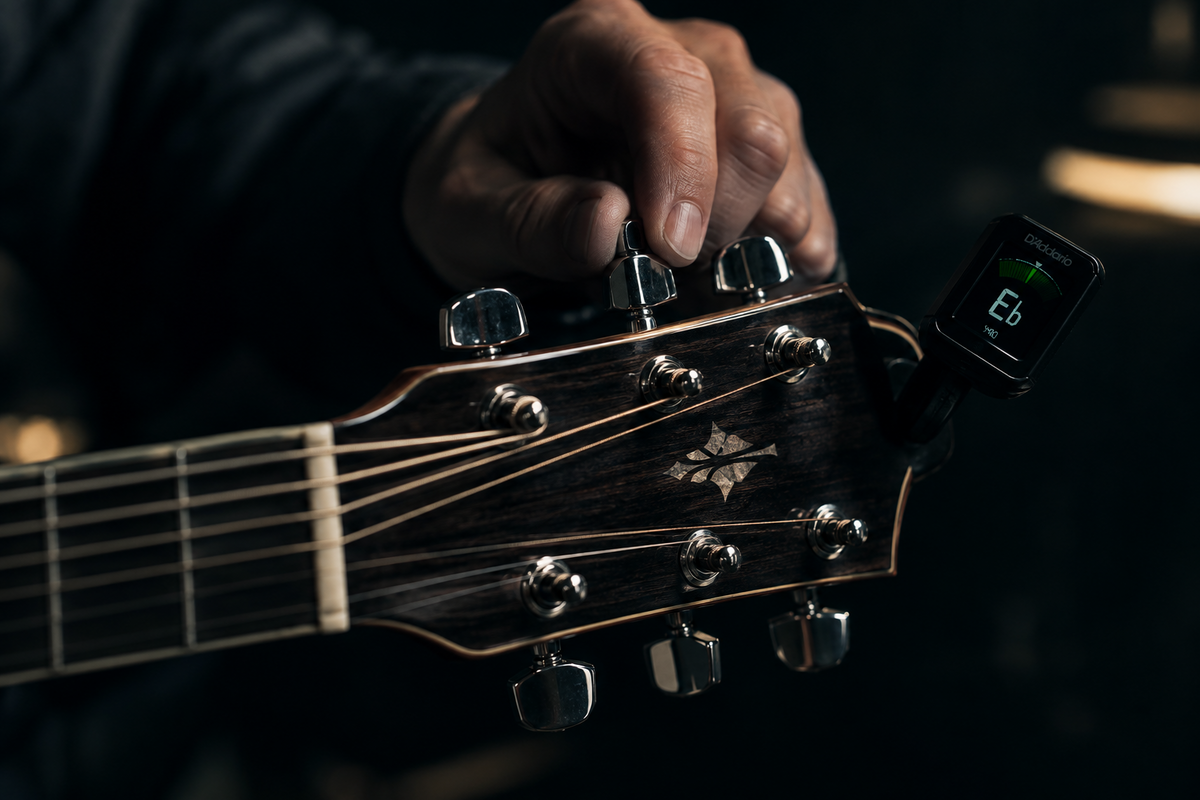
- Clip-on tuner: clips to the headstock and reads vibration. Quiet environments only, but cheap and reliable for home practice.
- Pedal tuner: sits on your pedalboard and mutes the signal while you tune. Accurate, fast and practical for gigging.
- Tuner app: free and surprisingly accurate on a modern smartphone. Fine for home use; not practical on a noisy stage.
A standalone tuner (clip-on or pedal) is worth buying even if you use an app, because it works reliably in any environment.
Strings
Beginners should start with light-gauge strings (.009–.042 or .010–.046). Change them every two to three months under regular practice, or sooner if they sound dull or feel rough. Always carry a spare set. When changing strings, loosen one string at a time rather than removing all of them at once, which can cause the neck to shift under the sudden change in tension.
Picks
Try a few thicknesses. Thin picks (0.46mm–0.60mm) are forgiving for strumming; medium picks (0.73mm–0.88mm) suit most playing styles; heavy picks (1.0mm and above) give more control for lead playing. Carry at least three or four picks at any time. They disappear constantly.
Other small accessories
- Strap locks: prevent your strap from detaching mid-performance. A guitar hitting the floor is an expensive accident.
- Cleaning cloth: a microfibre cloth removes sweat and grime from strings and the body after each session, extending string life.
- Spare batteries: if your guitar has active pickups or you use a wireless system, keep a spare 9V battery in your bag.
- String winder and wire cutters: speed up string changes significantly.
For a broader look at must-have guitar accessories, Musicstreet’s guide covers maintenance items and ergonomic accessories in more detail.
Pro Tip: When coiling a cable for storage, use the over-under technique rather than wrapping it around your arm. It prevents the internal wire from twisting, which is the main cause of cable failure.
Effects pedals and optional kit: what to buy first and what to leave for later
Pedals are tempting. They are also the fastest way to spend money on things that do not improve your playing. The honest advice: buy nothing until you can play a few songs cleanly through a dry amp signal.
When you are ready, three pedal types add genuine value early on:
- Tuner pedal: mutes your signal while you tune on stage. More practical than a clip-on once you start playing with other people.
- Overdrive or boost pedal: adds grit and sustain. A single overdrive pedal covers everything from mild crunch to hard rock when paired with your amp’s gain control.
- Reverb pedal: adds space and depth to your tone. Even a small amount makes a clean guitar sound far more musical.
Delay and chorus pedals are worth exploring once you have a solid foundation. Multi-effects units (a single unit containing dozens of effects) are a reasonable alternative to buying individual pedals, particularly if you want to experiment without committing to a specific sound. Many modelling amps include these effects built in, which means you may not need a separate pedal at all for the first year.
A pedalboard becomes worth buying once you have three or more pedals. Before that point, it is an unnecessary expense.
Pro Tip: Before buying any pedal, check whether your amp or amp simulator already includes that effect. Most modelling amps and amp sim plugins cover overdrive, reverb, delay and chorus as standard. Try the built-in version first.
Starter pack examples and a realistic UK budget breakdown
A more comfortable starter kit with a better guitar and a modelling amp sits closer to £350–£500.
These are approximate UK retail price ranges. Buying a pre-owned guitar in good condition from a reputable source can reduce the guitar cost significantly without sacrificing quality.
Buying safely
- Check the return policy before purchasing online. A reputable retailer will offer at least 14 days.
- Ask whether a setup is included or available. A guitar that has been professionally set up plays better straight away.
- Inspect a used guitar for neck bow, fret wear and tuning peg stability before buying.
- Confirm the warranty terms. New guitars from reputable retailers typically carry a manufacturer warranty.
Why a professional setup makes your guitar far easier to play
A professional setup will make even a budget guitar play and intonate correctly. Without one, many factory-fresh guitars arrive with action that is too high, a nut that has not been cut properly, and intonation that drifts sharp or flat above the 7th fret. None of those problems are obvious to a beginner, but all of them make learning harder.
A guitar technician performing a setup will typically:
- Check and adjust the truss rod to correct neck relief
- File or replace the nut slots to the correct depth and width
- Set the action at the bridge saddles to the correct height for the string gauge
- Set the intonation at each saddle so the guitar plays in tune across the full fretboard
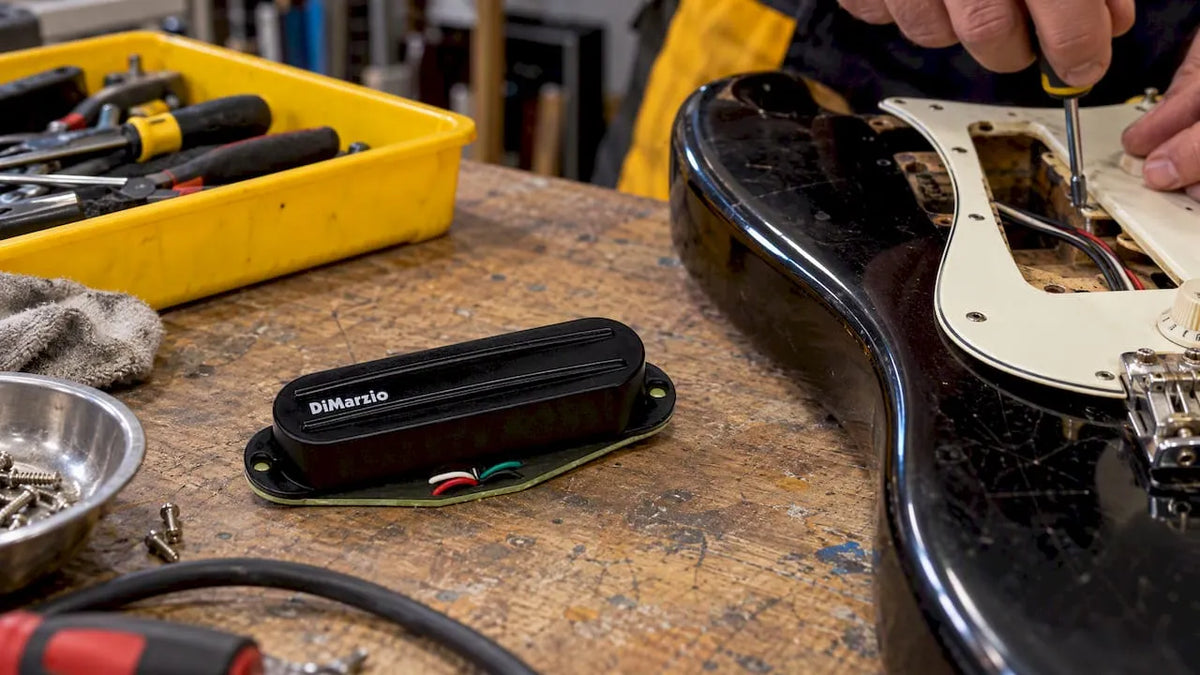
- Adjust pickup height to balance output and reduce unwanted noise
- Clean and condition the fretboard
- Check all hardware (tuning pegs, strap buttons, output jack) for tightness
A professional setup in the UK typically costs tens of pounds depending on the work required and the technician. That is a small investment relative to the improvement in playability.
Pro Tip: Book a setup whenever you change string gauge, after buying a used instrument, or if the guitar has been stored for more than a few months. Temperature and humidity changes cause necks to shift, and a quick setup brings everything back into spec. When booking, tell the technician which string gauge you use so they can set the action and nut slots accordingly.
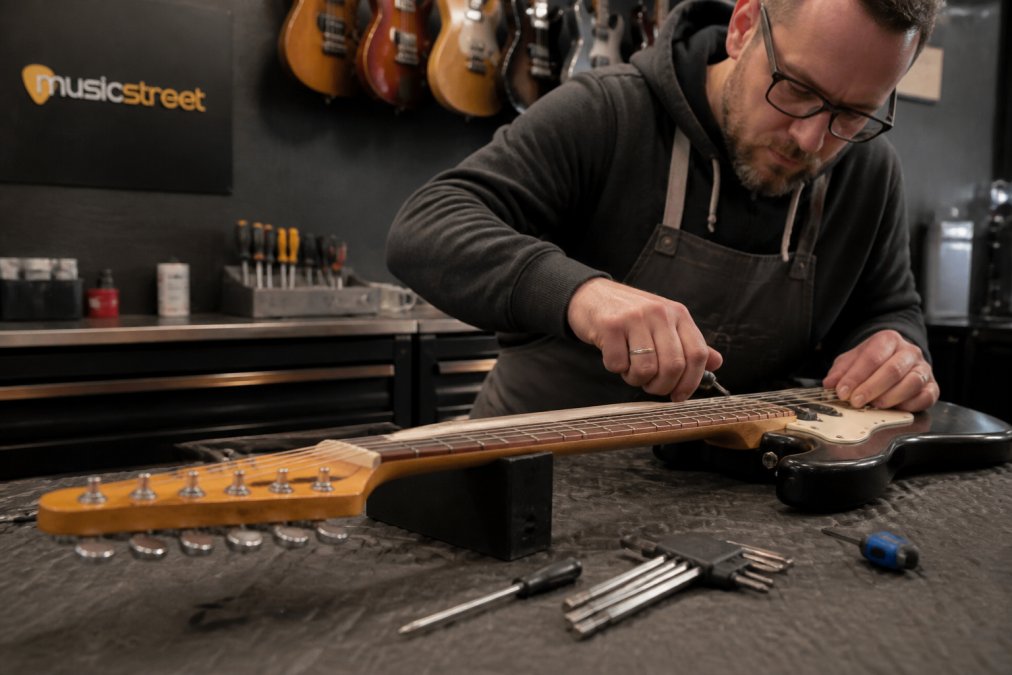
Musicstreet offers professional setup and repair services from their Huntingdon store. For beginner guitarist essentials and setup guidance, their team can advise on what your specific guitar needs.
A short buying checklist to use before you commit
Whether you are buying in a shop or ordering online, run through these questions before handing over your money.
- Can I try it? If buying in person, always play the guitar before purchasing. If buying online, confirm the return policy.
- How is the action? Press the strings at the first and last fret simultaneously. The gap at the 12th fret should be small and even across all strings.
- Is the intonation reasonable? Play the open 6th string, then the same string at the 12th fret. Both should be in tune.
- Any visible damage? Check the headstock, nut, frets, body and neck joint carefully.
- What is the return policy and warranty? Know your rights before you buy.
- Is a setup included or available? A guitar that ships without a setup may need one before it plays comfortably.
- Does the neck feel right? Comfort matters more than brand name for a beginner. A guitar you enjoy holding gets played more.
Prioritise playability over brand name. A well-set-up mid-range guitar from a reputable source will serve you better than a prestigious name that arrives with poor action and a twisted neck. For help selecting the right electric guitar for your hands and goals, Musicstreet’s team can walk you through the options.
What Musicstreet usually tells beginners
The most common mistake we see at Musicstreet is a beginner spending £300 on a guitar and then connecting it with a £3 cable to an amp they have never had set up. The cable introduces noise, the setup makes the guitar feel stiff and unrewarding, and the beginner concludes that they are not making progress when the real problem is the equipment around the guitar, not the guitar itself.
The advice we give consistently: buy a playable guitar in your budget, get it set up professionally before you start, and invest in a decent cable and a small practice amp or a reliable amp simulator. Those three decisions account for most of the difference between a beginner who sticks with it and one who gives up after six weeks.
Skimping on a cable is a false economy. A £10 cable that introduces hum and cuts out mid-practice is genuinely demoralising. Spend £20–£25 on something with solid jack housings and you will not think about it again for years.
Musicstreet can help you get the right gear from the start
Getting your first electric guitar setup right is much easier with someone who knows what to look for. Musicstreet stocks new and pre-owned electric guitars, accessories, and maintenance tools, with a physical store in Huntingdon, Cambridgeshire where you can try instruments before buying.
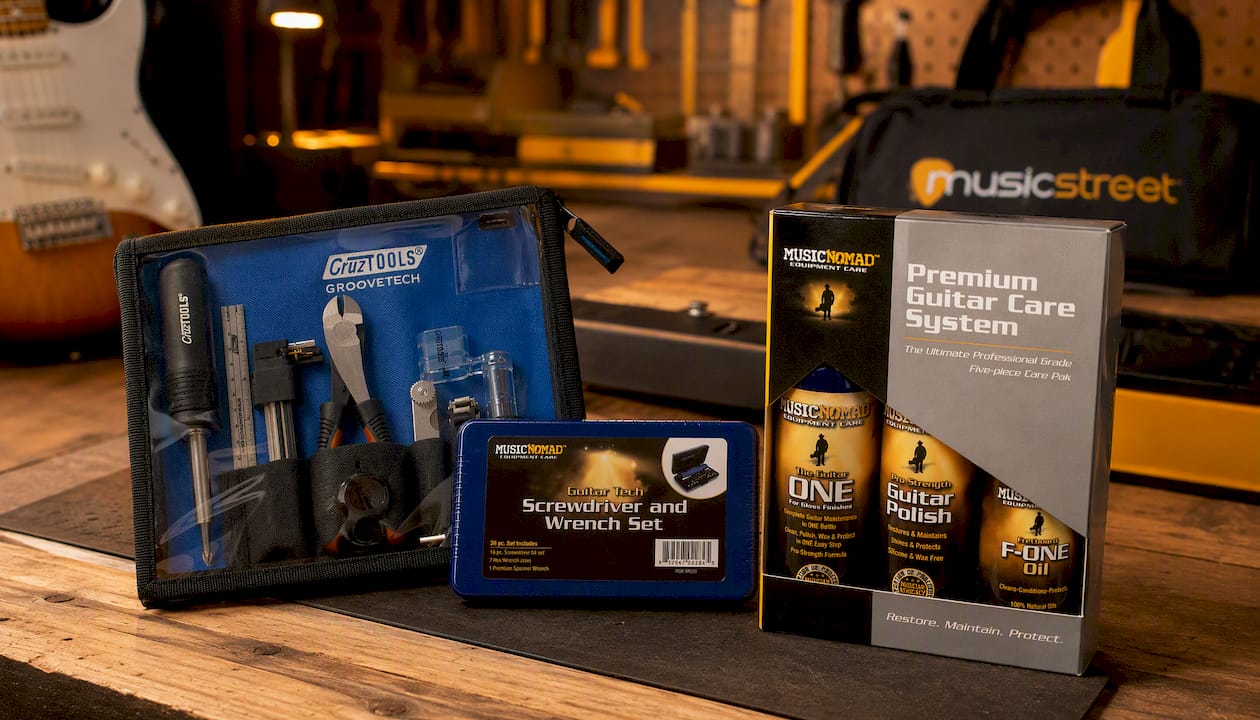
The CruzTools Groovetech Guitar Player Tech Kit is a practical first maintenance kit that covers string changes, truss rod adjustments and basic hardware checks. For pre-owned instruments at accessible prices, the used Ibanez GSA60 is a solid example of the kind of affordable, playable electric guitars Musicstreet carries in stock. Every pre-owned guitar sold through Musicstreet is inspected before sale, and the team can arrange a professional setup at the same time.
Free UK delivery is available on qualifying orders, and the team is available for personalised advice whether you are buying online or visiting the store. Get in touch with Musicstreet to discuss your first setup or browse the current stock at Musicstreet.
Sources
- The 11 Essential Tools for Any Guitarist - Fender
- Marshall
- Beginner’s Guide to Electric Guitar Gear (THE ESSENTIALS) | Andy Guitar
- Guitar Gear for Beginners: The Ultimate Checklist
FAQ
What do I need to play electric guitar for the first time?
At minimum, you need an electric guitar, an amp or amp simulator, a 1/4" TS cable, a tuner, and picks. A strap and a spare set of strings are worth adding straight away.
What accessories does an electric guitar need?
Fender recommends a tuner, strap, extra strings, picks, capo, case or gig bag, cable and stand as the core accessories every guitarist should own.
Do I need an amp to play electric guitar?
Yes, an electric guitar produces almost no usable sound without amplification. A small physical combo amp or an amp simulator running through headphones both work well for home practice.
How much does a beginner electric guitar setup cost in the UK?
A bare-minimum setup including guitar, practice amp, cable, tuner, strap and strings generally costs under a few hundred pounds in the UK. A more comfortable starter kit with better gear typically costs more than that.
What is a guitar setup and do I need one?
A professional setup adjusts the truss rod, nut, action, intonation and pickup height so the guitar plays correctly. It costs roughly £40–£80 in the UK and makes a significant difference to how easy the guitar is to play, particularly on budget instruments.






Share:
The complete Ibanez guitar models list: series, specs and UK buying guide
How often should you change your guitar strings?