

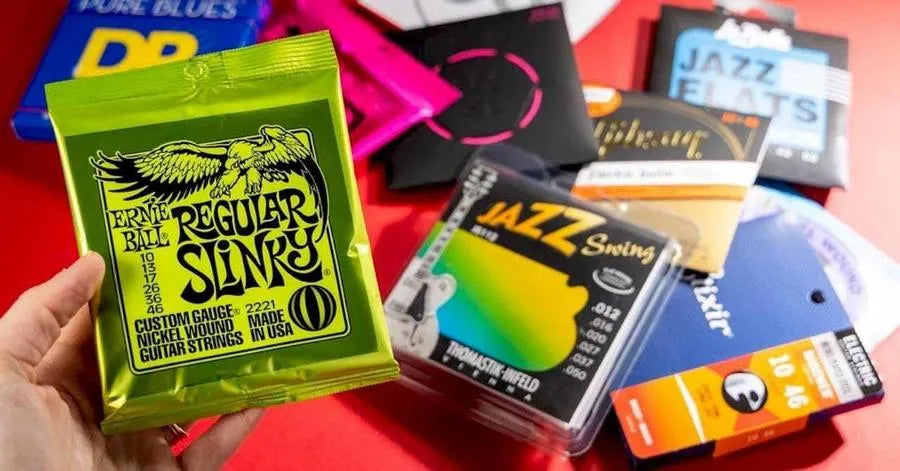
Choosing the correct electric guitar strings influences your tone, playability, and overall enjoyment during practice.
Selecting strings involves decisions about gauge, material, winding type, and coating to match your style, instrument, and environment.
Choosing the right electric guitar strings directly shapes your tone, playability, and how much you enjoy every practice session. String selection covers four key decisions: gauge, material, winding type, and coating. Brands like D’Addario and Ernie Ball offer dozens of combinations across all four categories. Get these choices right and your guitar feels easier to play, sounds better recorded, and stays in tune longer. This guide walks you through every factor so you can choose strings that match your style, your instrument, and your budget.
How to pick electric guitar strings by gauge
String gauge is the diameter of your strings, measured in thousandths of an inch. The most common electric guitar gauges run from .008 (extra light) up to .013 and beyond (heavy). That small difference in thickness changes almost everything about how your guitar feels and sounds.

Lighter gauges, such as .009 or .008 sets, are easier to bend and fret. They suit beginners and lead players who rely on fast runs and expressive bends. The trade-off is that lighter strings produce slightly less volume and sustain, and they can go out of tune more easily under aggressive picking.
Heavier gauges, from .011 upwards, deliver a fuller, warmer tone with stronger sustain. They also hold tuning better, which matters significantly if you play in drop D or lower tunings. Heavier gauge strings are the standard choice for metal and hard rock players who tune below standard E, precisely because the added tension keeps the strings from going slack and losing definition.
The most popular all-round choice for electric guitar is a .010 set. It balances playability with tone and works well for standard tuning across rock, blues, and pop.
Pro Tip: Switching gauge changes the tension on your neck and bridge. Always check your intonation after a gauge change, and consider a professional setup if you move more than one gauge step in either direction.
-
.008–.009: Best for beginners, lead players, and those with hand fatigue issues
-
.010: The most versatile all-round gauge for standard tuning
-
.011–.012: Ideal for blues players who want more body and sustain
-
.013+: Suited to jazz and heavy drop tunings where tension and warmth matter most
What role do materials and winding types play?
Electric guitar string construction is the factor most players overlook, yet it has a profound effect on your tone and how the strings feel under your fingers.
Wrap wire materials
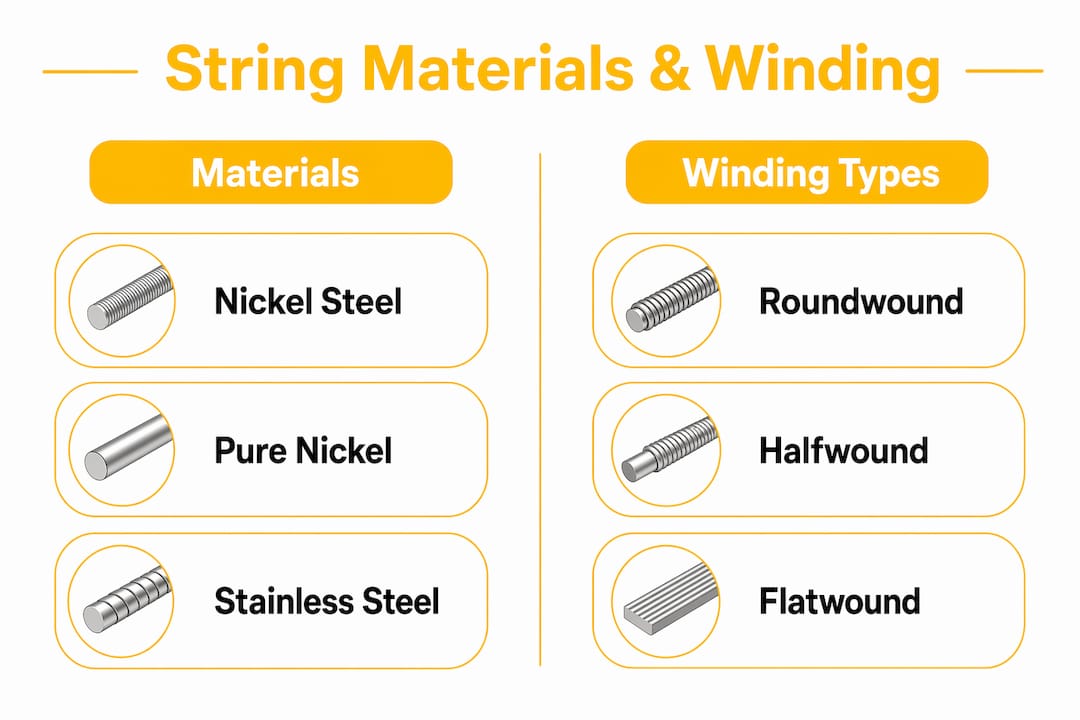
The three most common wrap wire materials are nickel-plated steel, pure nickel, and stainless steel. Each produces a noticeably different sound. Stainless steel strings are the brightest and most articulate, with a crisp attack that cuts through dense mixes. Pure nickel strings sit at the opposite end, producing a warm, vintage tone that suits classic rock and blues. Nickel-plated steel sits between the two and is the most widely used material because it balances brightness with warmth.
Most factory-fitted strings on guitars from Fender and Gibson use nickel-plated steel for exactly this reason. It works across genres without pushing too far in any tonal direction.
Winding types compared
| Winding Type | Tone | Feel | Best For |
|---|---|---|---|
| Roundwound | Bright, articulate | Textured, some finger noise | Rock, pop, metal, country |
| Flatwound | Warm, dark, vintage | Smooth, minimal finger noise | Jazz, blues, vintage styles |
| Halfwound | Balanced, moderate brightness | Semi-smooth | Players wanting a middle ground |
Roundwound strings are the most common type and deliver bright, articulate tone with strong sustain. The round wrap wire creates harmonic complexity and a lively attack. Flatwound strings use a flat ribbon wrap that reduces finger noise, creates a smoother feel, and produces a darker, more vintage tone. Jazz players have relied on flatwounds for decades because the warmth suits chord-melody playing and clean amplifier tones.
Halfwound strings, sometimes called groundwound or semi-flat, are wound with a round wire that is then ground down to a flatter surface. They sit between roundwound brightness and flatwound smoothness, which makes them a practical choice if you want less finger noise without losing all the brightness.
The winding surface texture affects not just tone but your physical experience of playing. A rougher roundwound surface creates more grip and tactile feedback. A smooth flatwound surface lets your fingers glide, which changes how you phrase and articulate notes.
Pro Tip: If you record at home and find finger squeaks appearing in your takes, try a halfwound or flatwound set before reaching for noise reduction plugins. The fix is often in the strings, not the software.
Coated vs uncoated strings: which suits you?
Coated strings have a thin polymer layer applied over the wrap wire. This coating resists sweat, oils, and humidity, which are the main causes of string corrosion. Coated strings extend the useful life of your strings significantly and are particularly suited to frequent gigging, humid climates, or players whose sweat is highly acidic.
Uncoated strings feel more traditional. They have a slightly grittier texture and tend to sound brighter and more open straight out of the packet. Many players feel that uncoated strings respond more dynamically to picking nuance, especially in the first few hours of use.
The real-world trade-off is this: how quickly tone dulls over time often matters more to player satisfaction than the initial tonal difference between coated and uncoated sets. An uncoated string may sound slightly better on day one, but if you are playing every day, it can sound dead within two weeks. A coated string may feel slightly different underhand, but it holds its tone for considerably longer.
-
Choose coated strings if: You gig regularly, live in a humid climate, have acidic sweat, or want to change strings less frequently
-
Choose uncoated strings if: You prioritise the most natural feel and tone, change strings often, or are on a tighter budget
Pro Tip: Try both types back to back on the same guitar before committing to one. Buy a single set of each and restring after a week. Your hands will tell you which one feels right.
For a deeper look at specific products, Musicstreet’s guide to best electric guitar strings covers top-rated sets across all winding types and coatings.
How do you match strings to your playing style and tuning?
Your genre, tuning, and technique should drive your final string choice. Here is a practical framework to follow:
-
Identify your primary genre. Jazz players typically favour medium or heavy-gauge flatwounds for warm, smooth tones. Blues players often choose .011 roundwounds for expressive bends with body. Metal players in drop tunings need .011 or heavier to maintain tension and clarity.
-
Consider your tuning. Standard E tuning works well with .009 to .011 sets. Drop D suits .010 to .011. If you regularly play in C or B standard, move to .011 or .012 to keep strings from feeling loose and undefined.
-
Think about your technique. Heavy strummers and hard pickers benefit from heavier gauges because lighter strings can break under aggressive attack. Fingerpickers and lead players who bend frequently will find lighter gauges more forgiving.
-
Factor in your guitar’s scale length. A longer scale length, such as the 25.5-inch scale on a Fender Stratocaster, creates more tension than the 24.75-inch scale on a Gibson Les Paul. This means the same gauge feels slightly tighter on a Stratocaster. Players moving between the two often drop half a gauge step to compensate.
-
Recheck your setup after any change. Switching string gauge modifies the overall tension system, influencing break angle, feel, and intonation. A quick intonation check after restringing takes five minutes and prevents tuning problems in the long run.
If you are still building your understanding of the instrument, Musicstreet’s guide on electric guitar tips for beginners covers string care alongside technique fundamentals.
What are the best habits for maintaining your strings?
String maintenance is the simplest way to protect your tone between purchases. Most players change strings far less often than they should.
Gibson recommends restringing every three months or after approximately 100 hours of playing. That figure assumes regular practice. If you play daily for an hour, you are looking at a fresh set roughly every three months. If you gig weekly, you may need to restring more frequently.
Signs that your strings need replacing include visible corrosion or discolouration on the wrap wire, fraying near the bridge or nut, a dull or lifeless tone that does not respond to your amp settings, and difficulty staying in tune even after a proper tuning session.
-
Wipe strings down after every session with a dry cloth to remove sweat and oils
-
Wash your hands before playing to reduce the transfer of grime onto the strings
-
Store your guitar in a case or on a stand away from direct sunlight and humidity
-
Inspect strings weekly by running your fingers along the underside of each string to feel for rough spots or corrosion
-
Use a proper restringing technique to avoid kinks in the string near the tuning peg, which weakens the string and affects tuning stability
For a step-by-step walkthrough, Musicstreet’s guide on how to change electric guitar strings covers the full process with tips on maintaining tone and setup.
Key takeaways
Choosing the right electric guitar strings requires matching gauge, material, winding type, and coating to your playing style, tuning, and maintenance habits.
| Point | Details |
|---|---|
| Gauge drives playability | Lighter gauges (.009) suit bending and beginners; heavier gauges (.011+) suit lower tunings and fuller tone. |
| Material shapes tone | Nickel-plated steel is the most versatile; stainless steel is brighter; pure nickel is warmer and more vintage. |
| Winding type affects feel | Roundwounds are bright and tactile; flatwounds are smooth and dark; halfwounds offer a middle ground. |
| Coated strings last longer | Coated sets resist corrosion and hold tone longer, making them ideal for frequent players or humid conditions. |
| Setup check is non-negotiable | Always check intonation after changing gauge to avoid tuning and playability problems. |
What i have learned from years of changing strings
The most common mistake I see guitarists make is choosing strings based on what their favourite artist uses, without accounting for their own hands, guitar, or playing context. Slash plays .011s on a Les Paul with a 24.75-inch scale. That same gauge on a Stratocaster feels noticeably tighter. Context matters more than copying.
My honest experience with coated strings took time to form. I resisted them for years because I felt the coating dulled the initial brightness. Then I started gigging more regularly and noticed how quickly uncoated strings died under stage conditions. The tonal difference between a fresh uncoated set and a two-week-old coated set is negligible. The difference in feel between a dead uncoated set and a still-lively coated one is enormous.
The other thing theory does not prepare you for is how much winding type changes your playing style. When I switched to flatwounds for a recording session, I found myself playing differently. The smooth surface encouraged longer, more legato phrases. The reduced finger noise made me less cautious about position shifts. Strings are not passive components. They actively shape how you play.
My practical advice: start with a .010 nickel-plated roundwound set if you are unsure. It is the closest thing to a universal starting point. From there, adjust one variable at a time. Change the gauge first, then experiment with winding type, then try a coated version of your preferred set. Changing everything at once makes it impossible to know what actually made the difference.
— Music
Find your perfect strings at Musicstreet

Musicstreet stocks a broad selection of electric guitar strings across all gauges, materials, and winding types, from light .009 sets for beginners to heavy flatwounds for jazz and drop-tuning players. Whether you are restringing for the first time or refining a tone you have been chasing for years, the team at Musicstreet can point you in the right direction. Browse the full range and get expert guidance at Musicstreet. Free UK delivery is available on qualifying orders, and the team is on hand to help you match strings to your guitar, your style, and your budget.
FAQ
What gauge electric guitar strings should a beginner use?
A .009 or .010 set is the best starting point for beginners. These gauges are easier to fret and bend, reducing finger fatigue while you build technique.
What is the difference between roundwound and flatwound strings?
Roundwound strings are bright and articulate with a textured feel, while flatwound strings produce a warmer, darker tone with a smooth surface and minimal finger noise.
How often should i change my electric guitar strings?
Gibson recommends changing strings every three months or after approximately 100 hours of playing. Signs of wear include dull tone, visible corrosion, and tuning instability.
Do coated strings sound different from uncoated strings?
Coated strings can feel slightly different under the fingers, but coated sets balance tone longevity against traditional feel. Neither type is universally better; the right choice depends on how often you play and your environmental conditions.
Does changing string gauge require a guitar setup?
Yes. Switching gauge changes the tension on your neck and bridge, which can shift intonation and action. A setup check after any gauge change keeps your guitar playing and sounding its best.










Share:
Reverb explained: what it is and how it works
Acoustic guitar vs electric guitar: first-time buyer's guide